| Portions | Prep Time |
|---|---|
| Serves 4-6 | 10 minutes |
Ingredients
Cheeses:
- 5 oz (140 g) Grey Owl goat cheese
- 5 oz (140 g) Riopelle
- 5 oz (140 g) Le Douanier
- 5 oz (140 g) Louis D’Or
- 5 oz (140 g) Ermite blue
Accompaniments:
- Honeycrisp apple
- Quebec honey
- Your favorite crackers
- Ice wine jelly
- Pecans
Drink Recommendations
- Quebec-produced hard cider
- Ice wine
- Cabernet Franc
Directions
Plating:
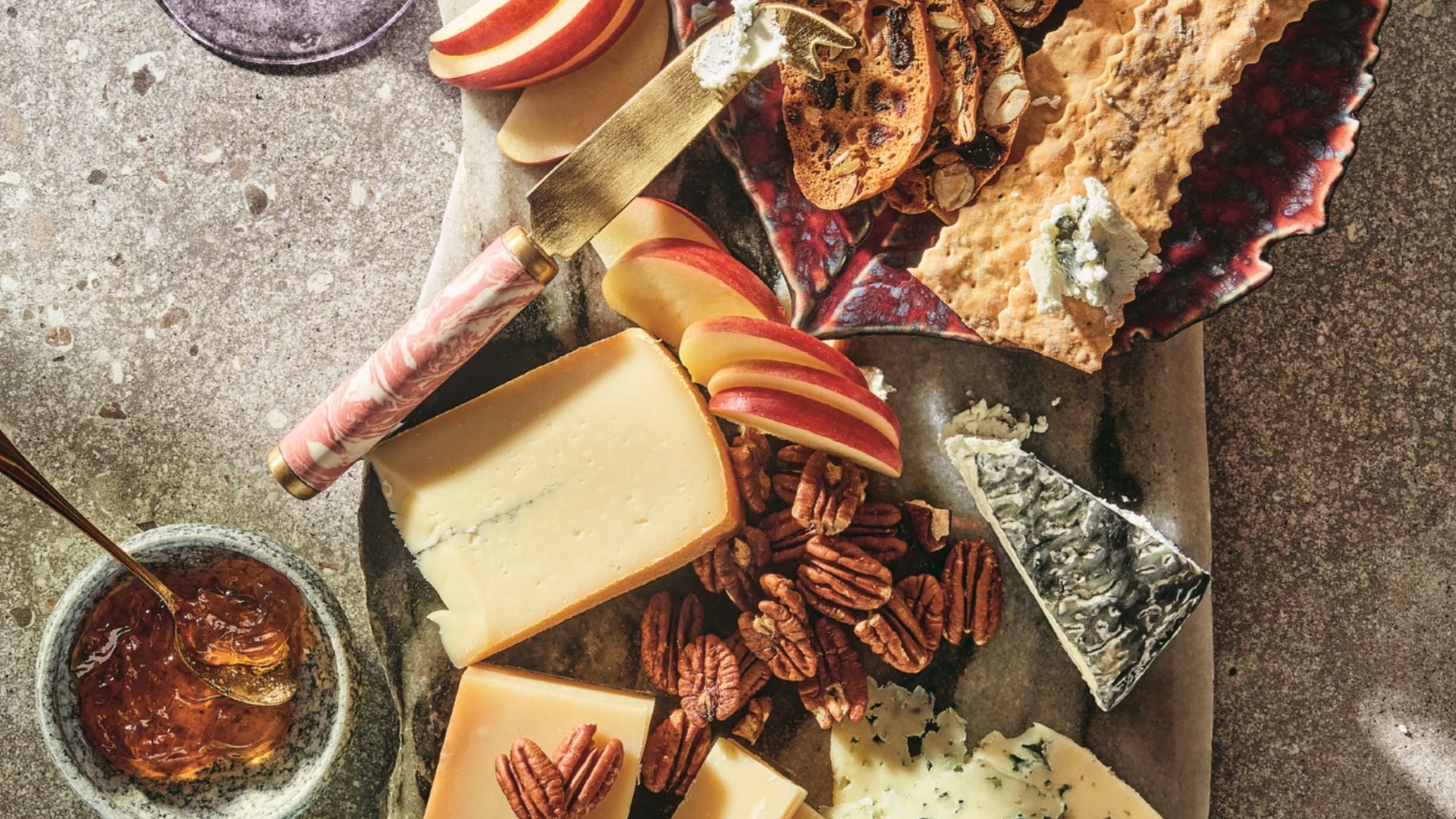
For the suggested types of cheese, try arranging them as follows:
- Leave the soft, creamy cow’s milk cheese in the shape you bought it in. Don’t cut up a gorgeous wheel of brie; let the guests see what it looks like in its original state, and let guests serve themselves with a small cheese knife.
- Ditto for the soft goat’s or sheep’s milk cheese—let it be.
- Cut the semisoft cow’s milk cheese into small triangular slices. Here is where you can get creative on a board. Sometimes I’ll create an almost X shape with the triangular pieces, and other times I’ll line them up simply from north to south on the board. Play around with it.
- Chunk up the firm or aged cow’s milk cheese in a rustic way. You can gently chip away at the block so the cheese almost crumbles, but keep it chunky. Doing it this way showcases that these cheeses are made by hand. Often people cut firm cheese into perfect cubes, but I don’t love this approach. Cheese isn’t perfect. These are handmade products that can have slight imperfections, and that’s the honest and noble part about cheese making that speaks to me. Once you’ve got your rustic cheese pieces, pile them up together nicely.
- Serve the blue cheese as a wedge. Its uniquely creamy and crumbly texture looks best that way, so don’t slice or chunk it. Let the blue veins shine and be prominent.
Accompaniments:
Now we need a few other ingredients to make the ultimate cheese board. Like the contrasting cheeses you’ve selected, you want contrasting flavors and textures for your garnishes. First up is a fresh, crusty baguette. It’s classic for a reason. The neutral flavor is perfect for creamier cheeses.
Another fun vessel is a fruit and nut crisp, like walnut-raisin or apricot-pistachio crisps. These pair beautifully with firmer, more robust, saltier cheeses and blue cheeses. Between these two bread products, you’ll have your bases covered. Water-based fruits are a must—think fresh apples, pears, grapes, and figs. Their high-water content and acidity levels make them wonderful palate cleansers as you travel through the various cheeses on your board. You’ll also want something sweet. Try a fig jam, a strawberry jam, or a dried fruit like apricots or dried cherries. Placing the jam in a ramekin is a nice touch, but either way, the color of the jam and fruit will brighten up the board. And you’ll need a savory component as well. Try red pepper jelly, caramelized onion jam, aged balsamic vinegar, or a savory chutney. There are hundreds of options, so pick what you like or try something new from your local cheese shop. I also like to include one or two cured meats, like a sliced prosciutto, serrano ham, milk salami, or sausage. If you’re including meat, don’t choose anything spicy, as it could overshadow the nuances of the cheeses.
Drinks Recommendations:
Lastly, you’ll need something to quench your thirst. You can go the cocktail route, or stick with wine. For white, I like a chilled Riesling, which has a freshness and acidity that complements the creamy or more funky cheeses. For red, I like Cabernet Franc, which is typically medium-bodied with ripe fruit on the palate, and again, great acidity. Because cheese is fat, the acidity in the wine is important to help cut through the richness. The most important thing to remember is that none of these suggestions are set in stone. I’m here to be your tour guide, but at some point, you need to choose your own adventure. Have fun with it, experiment, and keep track of what works and what doesn’t. That’s the best part!