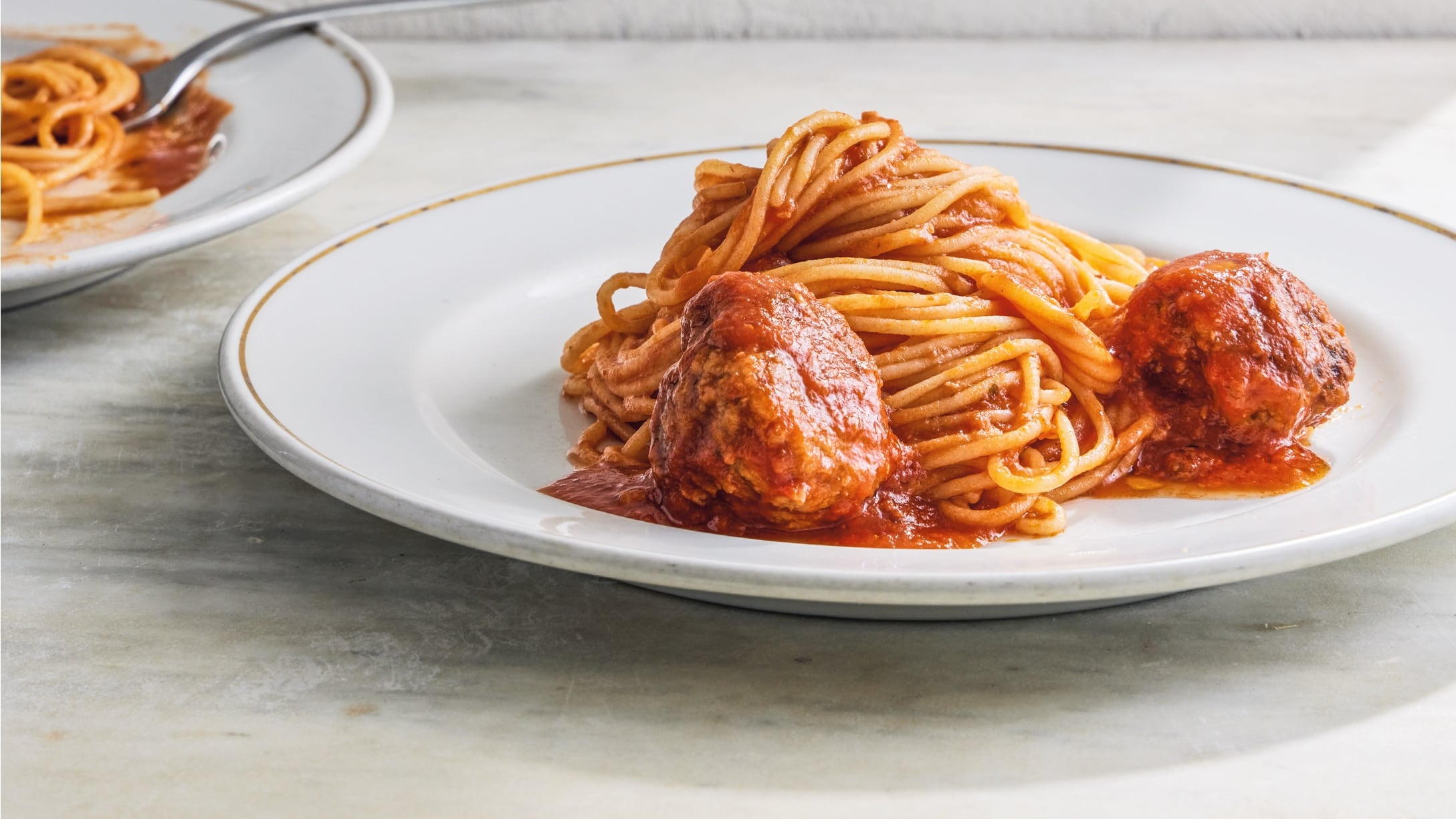
Excerpted from Lidia’s The Art of Pasta by Lidia Matticchio Bastianich and Tanya Bastianich Manuali. Copyright © 2025 Tutti a Tavola, LLC. Photographs by Dana Gallagher. Published by Appetite by Random House®, a division of Penguin Random House Canada Limited. Reproduced by arrangement with the Publisher. All rights reserved.
You can find Lidia Bastianich on Instagram, YouTube and Facebook.
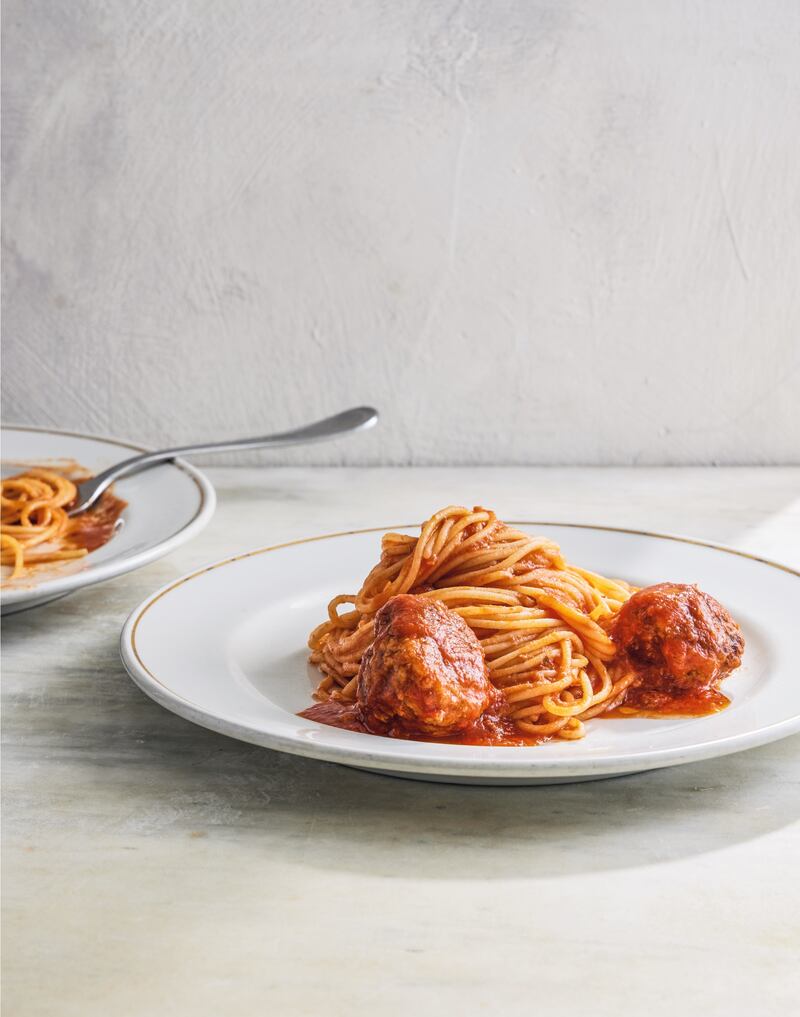
Spaghetti and Meatballs
I bake the meatballs here, which is easy and uses no extra oil, but you can also lightly flour and fry them in some olive oil, turning them until they’re crisp on all sides. Then drain them on a paper towel and add them to the sauce. The flour will make them a bit denser. Or you can gently add them raw to the simmering sauce, give them some time (about S minutes) to firm up, then gently move them around with a wooden spoon to coat them with sauce and cook through.
| Portion size |
|---|
| Serves 6 |
Ingredients
FOR THE MEATBALLS
- 1 small carrot, coarsely chopped
- 1 stalk celery, coarsely chopped
- 1 small onion, coarsely chopped
- 2 garlic cloves, crushed and peeled
- 1 pound ground beef
- 1 pound ground pork
- 2 large eggs, beaten
- ½ cup chopped fresh Italian parsley
- 1½ teaspoons dried oregano, preferably Sicilian oregano on the branch
- Kosher salt
- 1¼ cups fine dry breadcrumbs
FOR THE SAUCE
- ¼ cup extra-virgin olive oil
- 1 medium onion, chopped
- 2 fresh bay leaves, or 3 dried
- ½ teaspoon peperoncino flakes
- Two 28-ounce cans whole San Marzano tomatoes, crushed by hand
- Kosher salt
TO SERVE
- Kosher salt
- 1 pound spaghetti
- 1 cup freshly grated Grana Padano or Parmigiano Reggiano
Directions
- Preheat the oven to 425 degrees with racks in the upper and lower thirds, and line two baking sheets with parchment.
- To make the meatballs, put the carrot, celery, onion, and garlic in a food processor, and pulse to make a paste or pestata. Scrape the pestata into a large bowl. Add the beef, pork, eggs, parsley, oregano, and 2 teaspoons salt. Sprinkle the breadcrumbs over the top. Mix well with your hands until everything is thoroughly combined. Roll the mixture into balls about the size of golf balls, and arrange them on the baking sheets (you should get about twenty-four to thirty meatballs). Bake, rotating the pans from top to bottom halfway through, until the meatballs are nicely brown, 18 to 20 minutes.
- Meanwhile, to make the sauce, heat a large Dutch oven over medium heat, and add the olive oil. When the oil is hot, add the onion, and cook, stirring occasionally, until it begins to soften, about 4 minutes. Add the bay leaves and peperoncino, let everything sizzle for 30 seconds or so, then add the tomatoes, 3 cups water, and 2 teaspoons salt. Bring the sauce to a simmer, and cook until it begins to thicken slightly, about 20 minutes. After 20 minutes, gently add the baked meatballs, and continue to simmer until the sauce is thick and flavorful and the meatballs are tender, 30 to 40 minutes more (stir occasionally, to make sure the meatballs are not sticking, but try not to break them up).
- When you are ready to serve, bring a large pot of salted water to a boil for the pasta. Transfer 2½ to 3 cups of the sauce to a large skillet over medium-low heat. Keep the remaining sauce and the meatballs simmering.
- Add the spaghetti to the boiling water, and cook until it’s al dente. Transfer it with tongs to the simmering sauce. Toss to coat the pasta with the sauce, adding a little pasta-cooking water if it seems dry. Remove the skillet from the heat, and sprinkle everything with the grated cheese. Remove the bay leaves, and toss well. Serve the pasta on its own. Spoon about half of the meatballs into a shallow serving bowl, and spoon another cup or so of sauce over the top. Serve immediately, passing the pasta and meatballs separately.
- Let the remaining meatballs cool in the sauce, then pack them into containers and freeze them.
NOTE This makes enough sauce and meatballs for 2 pounds of pasta. I give directions for cooking half here, so freeze the rest for another time, or just make it all, with 2 pounds of pasta, for a big gathering.

Chestnut Pappardelle with Wild Mushrooms
In Italian cooking, the focus is on the quality of the ingredients, not on the quantity. Short of going foraging, the best place to find the best mushrooms in the fall is at your local farmers’ market. Use one of your favorites (I like small, firm porcini best), or a mix.
| Portion Size |
|---|
| Serves 6 |
Ingredients
- 1 recipe chestnut pasta dough (see below), or any of my fresh egg- pasta doughs made with all-purpose flour
- Kosher salt
- ¼ cup extra-virgin olive oil, plus more for drizzling
- 1½ pounds mixed fresh mushrooms (porcini, chanterelle, morel, shiitake), trimmed and thickly sliced
- 2 tablespoons unsalted butter
- 3 garlic cloves, peeled and sliced
- 2 teaspoons chopped fresh rosemary leaves, plus a sprig for garnish
- ¼ teaspoon peperoncino flakes
- 1 cup low-sodium chicken stock or pasta-cooking water
- ¼ cup chopped fresh Italian parsley
- ½ cup freshly grated Grana Padano or Parmigiano Reggiano, plus more for serving
Directions
- To make the pappardelle, cut the rested dough into four pieces. Roll one piece through a pasta machine on the widest setting to stretch it, fold it like a letter, and then feed the short end of the folded dough through the machine again. Repeat the rolling process to smooth out the dough and create an even rectangle. Repeat with the remaining pieces of dough. Switch to the next-lower setting, and roll each piece through only once. Continue to take the machine down a setting (or two, if the dough rolls through too easily; it depends on your machine), and roll the pieces through until you have four thin pieces about the width of your pasta machine. Cut each piece in half crosswise, to get eight pieces. Roll the pieces up lengthwise, like cigars, and cut them into 1-inch ribbons. Gently twirl them, and form them into loose nests on a floured baking sheet.
- Bring a large pot of salted water to a boil for the pasta.
- Heat the olive oil in a large skillet over medium-high heat. When the oil is hot, add about half the mushrooms. Cook and stir until they begin to wilt and leave space in the pan, then add the remaining mushrooms. Cook and stir until they give up their liquid; then increase the heat to boil the liquid away and caramelize the mushrooms, 8 to 10 minutes in all (this concentrates the flavour).
- Reduce the heat to medium, and stir in the butter to melt it. Add the garlic and rosemary, and season with 1 teaspoon salt and the peperoncino. Add the chicken stock, and simmer until the liquid is reduced by half, about 3 minutes.
- Meanwhile, add the pappardelle to the boiling water, and cook until it’s al dente, about 3 minutes. Transfer the pasta with tongs to the simmering sauce, drizzle with olive oil, sprinkle with the parsley, and toss to coat the pasta with the sauce, adding a little pasta water if it seems dry. Remove the skillet from the heat, and sprinkle with the grated cheese. Toss, garnish with the rosemary sprig, and serve immediately, passing more grated cheese at the table.
NOTE Cooking wild mushrooms always reminds me of foraging in the woods with my grandmother. She served them with fresh pappardelle, ribbons of the mellow pasta enveloping the glistening mushrooms, and added some chestnut flour to the regular flour to give the pappardelle that distinctive fall taste. You can serve the sauce with my recipe for Handmade Chestnut Pasta to re-create that dish, or use regular fresh pappardelle instead.
Handmade Chestnut Pasta
Chestnut flour is known as the Tuscan secret ingredient. It’s made from dried, milled chestnuts and used in making pasta, gnocchi, and castagnaccio, as well as other desserts. Its flavor is very mellow, with a tinge of sweetness. Chestnut
flour is more perishable than most flours, and it oxidizes rapidly, so keep it in the refrigerator or, even better, in the freezer. I like gentle sauces with this pasta: butter, cheese, bacon, prosciutto, and legumes like peas, favas, and ceci all pair well with it.
| Portion Size |
|---|
| Makes about 1 pound |
Ingredients
- 1½ cups chestnut flour
- 1cup all-purpose flour, plus more as needed
- 1 teaspoon kosher salt
- 2 large eggs
- ¼ cup extra-virgin olive oil
- 3 tablespoons ice-cold water, plus more as needed
Directions
- To make the dough in a food processor, put both flours and the salt into the bowl of a food processor, and process for a few seconds to aerate the mixture. Whisk the eggs, olive oil, and water in a spouted measuring cup to combine them. With the food processor running, pour in the wet ingredients through the feed tube. Process for about 30 to 40 seconds, until a dough forms (this dough is a bit stickier than the others in this chapter, so it won’t form a ball on the blade). After processing for about 30 seconds, transfer the dough to a lightly floured counter. Adjust with a bit of flour or water if needed, and knead until it is smooth, soft, and stretchy (but not sticky). It will feel a bit more soft and tender than the other pasta doughs in this chapter.
- To make the dough by hand, combine the flours and salt in a large bowl. Whisk the eggs, olive oil, and water in a spouted measuring cup to combine them. Make a well in the center, and add the mixed wet ingredients. Mix with a fork until the dough comes together in rough clumps. Flour your hands, and squeeze and knead the dough right in the bowl until you’ve formed a cohesive mass. Transfer the dough to a lightly floured work surface, and knead it until it’s smooth, soft, and stretchy (but not sticky), 3 to 6 minutes, depending on the strength and speed of your kneading. Just as with the food-processor dough, adjust with a little bit of flour or water, as needed, at the beginning of the kneading stage.
- Press the dough into a disk, wrap it well in plastic wrap, and let it rest at room temperature for at least½ hour. (You can refrigerate the dough for up to a day, or freeze it for a month or more. Defrost it in the refrigerator, and return it to room temperature, before rolling it.)
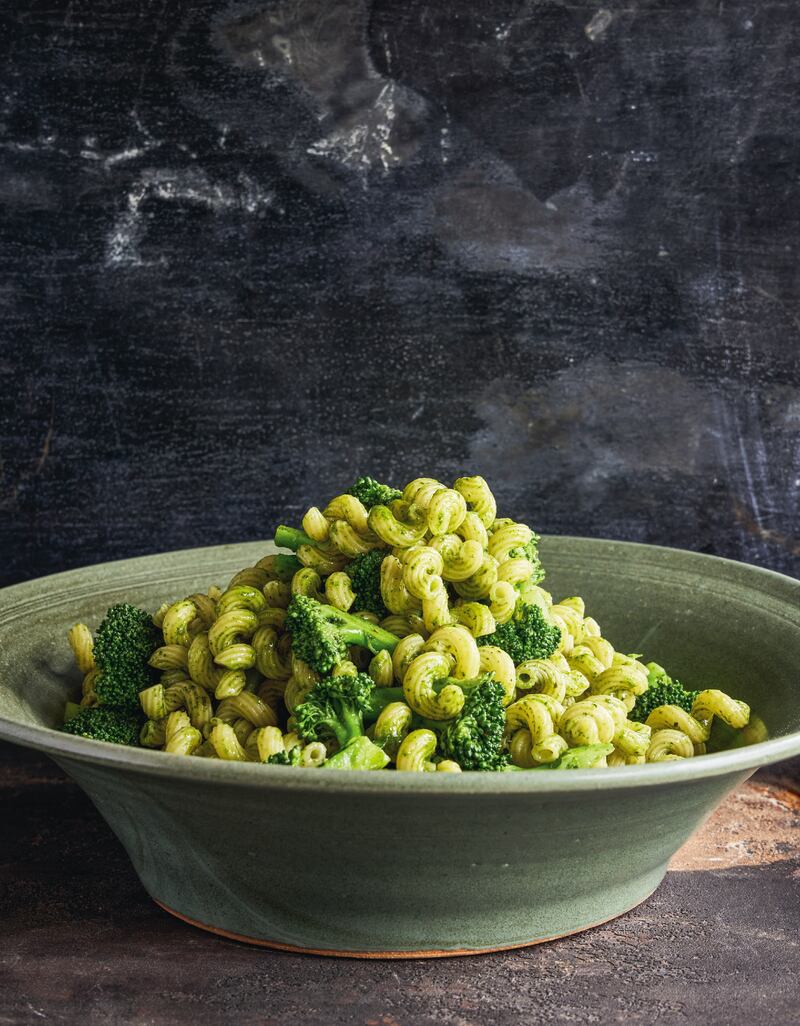
Cavatappi with Mixed Herb Pesto and Broccoli
When pairing pastas with sauces, it’s important to think about how they’ll play off each other. Here, the pesto coats the cavatappi nicely, and the pieces of broccoli get hooked in the twists of each strand.
| Portion Size |
|---|
| Serves 6 |
Ingredients
- Kosher salt
- 1 pound cavatappi
- 2 stalks broccoli, cut into small florets, stems peeled and diced
- 3 cups loosely packed fresh basil
- 3 cups loosely packed fresh baby spinach
- 2 garlic cloves, crushed and peeled
- Zest of 1 lemon
- ½ cup extra-virgin olive oil, plus more for drizzling
- ½ cup grated Pecorino Romano
Directions
- Bring a large pot of salted water to a boil for the pasta. Add the pasta to the water. When the pasta is about half cooked (about 5 minutes or so), add the broccoli, and continue to cook until the pasta is al dente and the broccoli is tender.
- Meanwhile, make the pesto. Combine the basil, spinach, garlic, lemon zest, and 1 teaspoon salt in a blender or mini-food processor. Pulse to make a chunky paste. With the machine running, add the oil in a slow, steady stream, and process to make an almost smooth pesto.
- Transfer the pesto to a large serving bowl. When the pasta and broccoli are cooked, transfer them with a spider to the bowl. Add ½ cup of the pasta-cooking water and a drizzle of olive oil. Toss to coat the pasta in the pesto, adding a little pasta water if it seems dry. Sprinkle with the grated cheese. Toss, and serve immediately.
NOTE Unlike most, this pesto has the added benefit of being nut-free.