
Excerpted from Bread Etc. Recipes + Techniques for Baking with Sourdough, Yeasted Dough, Pizza Dough + More by Matthew James Duffy. Copyright © 2025 Matthew James Duffy. Photographs by Alex Nirta. Published by Appetite by Random House®, a division of Penguin Random House Canada Limited. Reproduced by arrangement with the Publisher. All rights reserved.
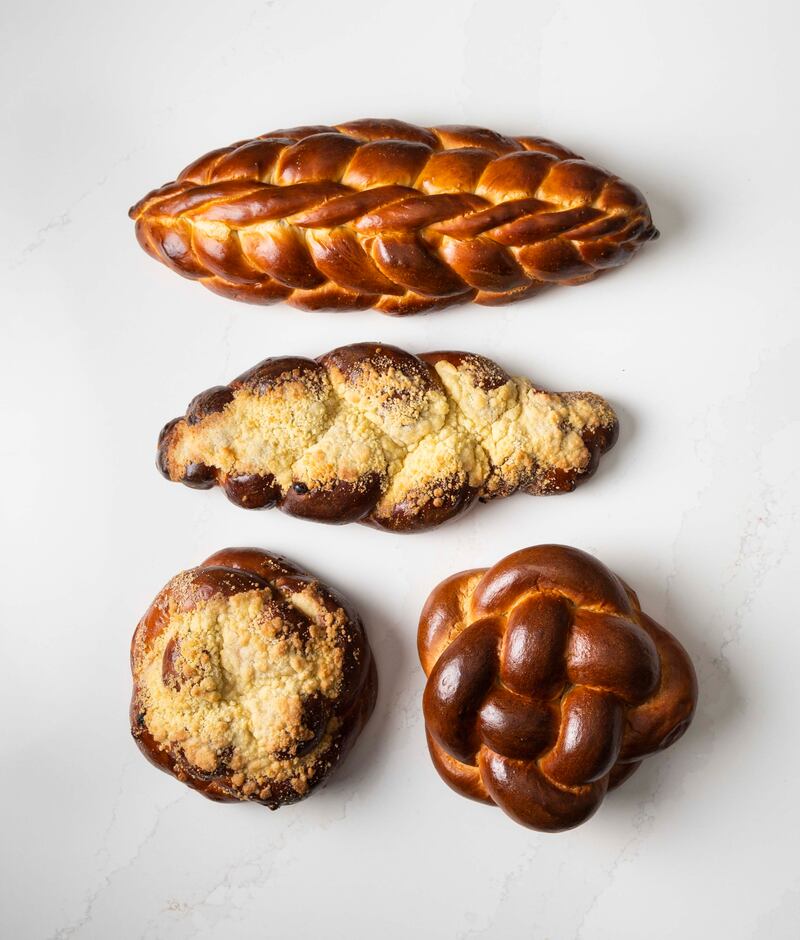
Challah
| Portion Size | Equipment Needed | Desired Dough Temperature (DDT) |
|---|---|---|
| Makes 2 875 g loaves | 2 to 3 sheet pans | 79°F to 82°F |
Dough Schedule
MIXING: 6 mins (stand mixer) or 8-10 mins (by hand)
BULK FERMENTATION: 1 hour
SHAPING & REST: 15 mins
FINAL FERMENTATION: 1 ½ to 2 hours
BAKING: 25-33 mins
Ingredients
- 426 g water
- 14 g active dry yeast
- 2 large eggs, beaten
- 101 g white sugar
- 76 g olive oil
- 806 g bread flour
- 201 g stone-ground or whole spelt flour
- 18 g salt
- Egg wash
- ½ cup sesame or poppy seeds, for sprinkling (optional)
Directions
- MIXING: To the bowl of a stand mixer fitted with the dough hook, add the water and yeast. Mix on low just to combine. Add the eggs, sugar and olive oil, followed by the flours and salt. Mix on low until combined with no dry patches, about 2 minutes. Increase to medium speed and mix until dough is smooth, about 4 minutes. Alternatively, mix by hand for 8-10 minutes.
- BULK FERMENTATION: Cover the bowl with a plastic bag or kitchen towel and let the dough rise at room temperature for 60 minutes.
- PRE SHAPING + REST: Using a plastic dough scraper, transfer the dough a work surface. Gently flatten it into a rectangle, then divide it into two pieces (875 g each). To make a four-strand challah, divide each of the pieces into four (219 g each). To make a three-strand challah, divide each of the pieces into three (292 g each). Flatten each piece slightly, then roll into a cylinder. Rest, covered, for 10 minutes.
- FINAL SHAPING: To make a three-strand challah: Roll each cylinder into a strand 18 inches (45 cm) long. Ideally, the middle of the strand will be slightly wider and the ends tapered, so it looks like a French-style rolling pin or a snake that has eaten a mouse. Line the three strands up lengthwise, then overlap their tails on the end farthest from you, with the tail of the middle strand on top. Number the position of the strands 1 to 3 (left, middle and right). The numbers themselves will stay put, meaning that, as you move a strand, it becomes the number of the position it’s in, not the number it was originally. Bring strand 1 over strand 2 so it’s in the middle. Then bring strand 3 over strand 2, placing it in the middle. Repeat until the braid is complete, then tuck in or taper the ends slightly to finish.
- To make a four-strand round challah: Alternatively, roll each cylinder into a strand 16 inches (40 cm) long. Roll the strands evenly, with no bulge in the middle. You are going to create a tic-tac-toe pattern with the strands. First, place one strand in front of you length-wise. Lay a second strand over it in the opposite direction, about three-quarters of the way up. Place the third strand over the second strand, running parallel to the first. Place the fourth strand across the bottom, about one-quarter of the way up, to create a square in the middle of the four strands. Make sure each strand has one part over and one part under another. Starting with the strand closest to you, move it clockwise, placing it over the strand next to it. Then take the strand underneath the one you just moved and move it clockwise, placing it over the next strand. Repeat until you have to pull and slightly stretch the last strand, then tuck them all under, toward the middle. This will help the challah hold its height.
- FINAL FERMENTATION: Proof, covered with a plastic bag or kitchen towel, at room temperature for at least 1½ and up to 2 hours. The dough is ready to bake when it has roughly doubled in size and is light to the touch. To check, gently press a finger into the dough; it should spring back but leave a slight indent.
- PREPARE TO BAKE: With the racks in the upper-middle and lower-middle positions, preheat the oven to 400°F (205°C), or to 375°F (190°C) for convection. Line two sheet pans with parchment paper. Double up the sheet pan you will be placing on the lower rack with another sheet pan, to diffuse the heat from the oven and prevent the challah from burning. (Note: If you don’t a have a third sheet pan, you can simply bake the loaves one at a time on the upper-middle rack.)
- BAKING: Place one challah on each prepared pan. Brush the loaves with egg wash and, if desired, sprinkle with seeds. Bake for 15 to 18 minutes, or until fully risen and beginning to take on color. Rotate the pans between the top and bottom racks and bake for 10 to 15 minutes, or until they are golden brown and have a slight shine.
- COOLING: Transfer the challahs from the pans to a wire rack to cool.

Cheddar Jalapeno Sourdough
| Portion Size | Equipment Needed | Desired Dough Temperature (DDT) |
|---|---|---|
| Makes 2 900 g loaves | Two bannetons’ Dutch oven | 79°F to 82°F |
Dough Schedule
LEVAIN: 4 to 5 hours
AUTOLYSE & INGREDIENT PREP: 1 hour
MIXING: 19 to 20 mins (by hand); 18 to 19 mins (stand mixer)
BULK FERMENTATION: 2 ¾ to 3 hours
SHAPING & REST: 45 to 50 mins
FINAL FERMENTATION: 12 to 18 hours
BAKING: 1 ½ hours
Ingredients
For Levain
- 32 g bread flour
- 8 g rye flour
- 40 g water, warm
- 40 g sourdough starter
For Final Dough
- 555 g Water 1
- 634 g bread flour
- 119 g whole wheat flour
- 40 g rye flour
- 119 g jalapeno peppers
- 159 g cheddar cheese
- 119 g Levain (prepared as in Step 1)
- 40 g Water 2
- 16 g salt
For Topping
- 120 g good quality old (sharp) Cheddar cheese, grated
Directions
For Levain
- MIXING + FERMENTATION: In a glass jar or plastic container, mix the flours, water and starter until combined. Loosely cover with a lid and ferment at room temperature for 4 to 5 hours, until ripe.
For Final Dough
- AUTOLYSE: Roughly 1 hour before your levain will be ready, add water 1 to a large mixing bowl or the bowl of a stand mixer. Add the flours and, using a rubber spatula, start stirring in the center, drawing the water into the flour. When the dough becomes too thick to stir with the spatula, wet your hands and use them to mix the dough, pinching to incorporate any dry patches and using a plastic dough scraper to scrape down the sides of the bowl. Rest, covered, at room temperature while the levain finishes rising.
- PREPARE THE JALAPEÑOS + CHEESE: Meanwhile, stem, halve and seed the jalapeños. Dice into ½-inch (1.25 cm) pieces. Dice the Cheddar into ½-inch (1.25 cm) cubes and lay them in a single layer to come to room temperature.
- MIXING: If mixing by hand: Add the levain and half of water 2 to the mixing bowl and mix until combined. Add the salt and the second half of water 2 and mix until the salt is fully incorporated into the dough. You will be mixing for about 15 minutes in total. At this point, the dough should be strong and elastic. Add the jalapeños and Cheddar and mix until fully incorporated, 4 to 5 minutes. The DDT is 79°F to 82°F (26°C to 28°C). If mixing by machine: Fit the dough hook to the mixer and add the levain to the bowl. Mix on low for 1 minute, until just combined, then increase to medium speed and mix for 4 minutes. Add the salt and mix on medium for 4 minutes. Continue mixing for 5 more minutes, gradually adding water 2 n three to four additions. At this point, the dough should be strong and elastic. Add the jalapeños and Cheddar and mix on low until fully incorporated, 4 to 5 minutes. The DDT is 79°F to 82°F (26°C to 28°C).
- BULK FERMENTATION : Cover the bowl with a plastic bag or kitchen towel and let the dough rise in a warm spot for 2¾ to 3 hours, folding it once after 30 minutes and, if it feels slack, again after 60 minutes.
- PRE- SHAPING + REST: Divide the dough into two pieces (900 g each). Using a bench knife, round each portion. The bottom should stay flush with the counter, helping to create the tension needed to form a taut ball (see p. 49). Rest, uncovered, for 20 to 25 minutes.
- FINAL SHAPING + REST: Shape each ball into a boule or bâtard and transfer each to a floured banneton. Rest, uncovered, for 20 minutes.
- FINAL FERMENTATION: Cover with a plastic bag and cold-proof in the fridge for at least 12 and up to 18 hours. The dough is ready to bake when it has risen to about one and a half times the size and is light to the touch. To check, gently press a finger into the dough; it should spring back but leave a slight indent.
- PREHEAT THE DUTCH OVEN : About 30 to 60 minutes before you are ready to bake, place a Dutch oven inside your oven, then preheat the oven to its highest temperature. Meanwhile, cut two pieces of parchment paper to roughly the same size as the opening of your Dutch oven. After 30 to 60 minutes, remove the Dutch oven to a heatproof surface.
- PREPARE TO BAKE: Remove one banneton from the fridge and gently flip the dough out onto one piece of parchment, then score. Remove the Dutch oven’s lid and carefully place the parchment and dough inside. Place the lid back over the Dutch oven, slightly askew, and quickly spritz about 15 sprays from a water bottle upward onto the inside of the lid before closing it fully. Return the Dutch oven to the oven and immediately lower the temperature to 470°F (245°C).
- BAKE THE FIRST LOAF: Bake for 22 minutes, then remove the Dutch oven’s lid completely (the dough should be fully risen and just starting to take on color; if it isn’t, leave the lid on for a few minutes longer for the next loaf ). Bake for 9 minutes, then sprinkle the grated cheese over the loaf (this allows it enough time to melt without hindering the bread’s rise). Bake for 5 minutes, or until the bread is a rich golden brown. The loaf should feel light and the bottom should produce a hollow sound when tapped.
- COOLING: Transfer the bread to a wire rack to cool for at least 1 hour before slicing.
- BAKE THE SECOND LOAF: Return the Dutch oven to the oven for 15 to 20 minutes to bring it back up to temperature, then repeat steps 10 to 12 for the second loaf.
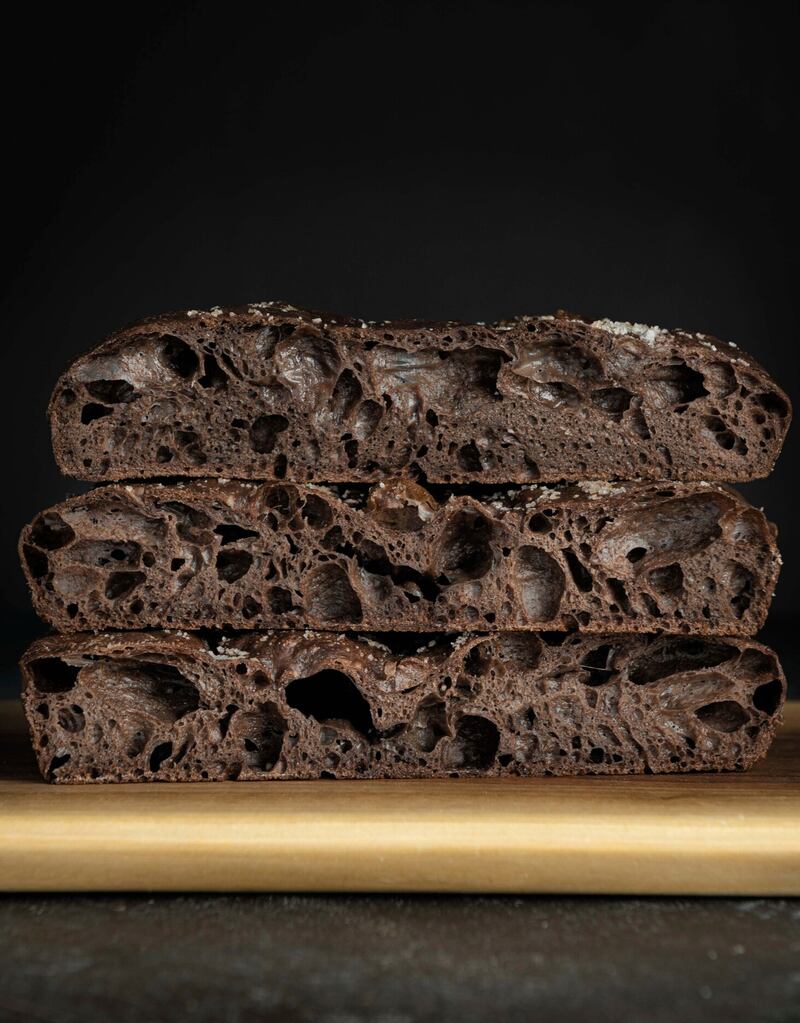
Chocolate Focaccia
| Portion Size | Equipment Needed | Desired Dough Temperature (DDT) |
|---|---|---|
| Makes 1 1200 g focaccia | Half-sheet pan or 14x10-inch Detroit-style pizza pan | 82°F |
Dough Schedule
LEVAIN: 4 to 5 hours
AUTOLYSE + MIXING + REST: 30 to 40 minutes
KNEADING: 8 to 11 minutes
BULK FERMENTATION: 14 to 17 hours
PRE-SHAPING + REST: 25 minutes
FINAL FERMENTATION: 3 to 4 hours
SHAPING + TOPPING: 2 to 3 minutes
BAKING: 30 to 35 minutes
Ingredients
For the Levain
- 56 g bread flour
- 56 g Water, warm
- Sourdough Starter
For the Cocoa Paste
- 26 g Dutch-process cocoa powder
- 51 g Water
For the Final Dough
- 390 g water
- 169 Levain (prepared as in Step 1)
- 385 g bread flour
- 77 g all-purpose flour
- 51 g Samolina
- 26 g Water 2
- 11 g salt
- 13 g olive oil, plus more for oiling the bowl and pan
- 77 g cocoa paste (prepared as in Step 3)
- 319 g dark chocolate, preferably 60% cacao, cut into chip-sized pieces (optional)
For Topping
- 3 tablespoons olive oil
- 1 tablespoon flaky sea salt
Directions
For the Levain
- MIXING + FERMENTATION: In a glass jar or plastic container, mix the flour, water and starter until combined. Loosely cover with a lid and ferment at room temperature for 4 to 5 hours, until ripe
For the Final Dough
- AUTOLYSE: In the bowl of a stand mixer, combine water 1 and the levain. Using your hands, gently agitate the levain, breaking it up. Add the flours and mix by hand, pinching to incorporate any dry patches, until well combined. You can also use a wet dough scraper to gold the dough over itself until no dry patches remain.
- MIXING + REST: Add water 2 and the salt to the bowl, and, using your hands, mix thoroughly, squeezing to incorporate the salt granules. Continue mixing for about 5 minutes, or until you can no longer feel any salt. Rest, covered, for 20 to 30 minutes.
- MAKE THE COCOA PASTE: Meanwhile, place the cocoa powder in a small bowl and slowly pour in the water while whisking; the mixture should be smooth and viscous, like a thick paste or pudding. If it isn’t, adjust the consistency by adding more water or cocoa powder. Cover with plastic wrap and set side.
- KNEADING: Fit the dough hook to the stand mixer and pour the olive oil over the dough. Mix on medium until all of the oil is incorporated and the dough no longer looks greasy, about 5 minutes. Add the cocoa paste and mix on medium until fully incorporated and the dough is no longer streaky, 3 to 5 minutes. Add the chocolate, if using, and mix on medium to combine. Transfer the dough to a lightly oiled bowl or dough container.
- BULK FERMENTATION: Cover the bowl with a plastic bag or kitchen towel and let the dough rise at room temperature for 2 hours, folding it three or four times, roughly 15 minutes apart. Transfer to the fridge and cold-proof for at least 12 and up to 15 hours.
- PRE-SHAPING + TEST: Remove the dough from the fridge 20 minutes before you want to pre-shape it. Meanwhile, lightly oil a 14x10-inch Detroit-style pizza pan or half-sheet pan. Use a bench knife to round the dough into a taut ball, then, with lightly oiled hands, transfer the dough to the prepared pan.
- FINAL FERMENTATION: Proof, covered, at room temperature for at least 3 and up to 4 hours. The dough is ready to bake when it has risen to about one and a half times and looks light and fully relaxed in the pan.
- PREPARE TO BAKE: Preheat the oven to 400F.
- FINAL SHAPING + TOPPING: Once the dough is fully relaxed, slide your hands underneath it and gently stretch it from the center to a corner of the pan; repeat with all four corners, being careful not to tear or degas the dough. Pour 3 tablespoons of olive oil over the dough and use your hands to rub it across the surface. With the tips of your fingers, dimple the dough, pressing down almost all the way through to the pan but taking care not to tear or puncture the bottom of the dough. Sprinkle the flaky sea salt evenly over top.
- BAKING: Bake for 20 minutes. Rotate the pan 180 degrees and bake for 10 to 15 minutes, or until the focaccia pulls away from the sides of the pan and is golden brown across its surface. It can be hard to gauge browning in chocolate bread, so you could take its temperature; it should be about 203F.
- COOLING: Slide the focaccia from the pan onto a wire rack to cool.
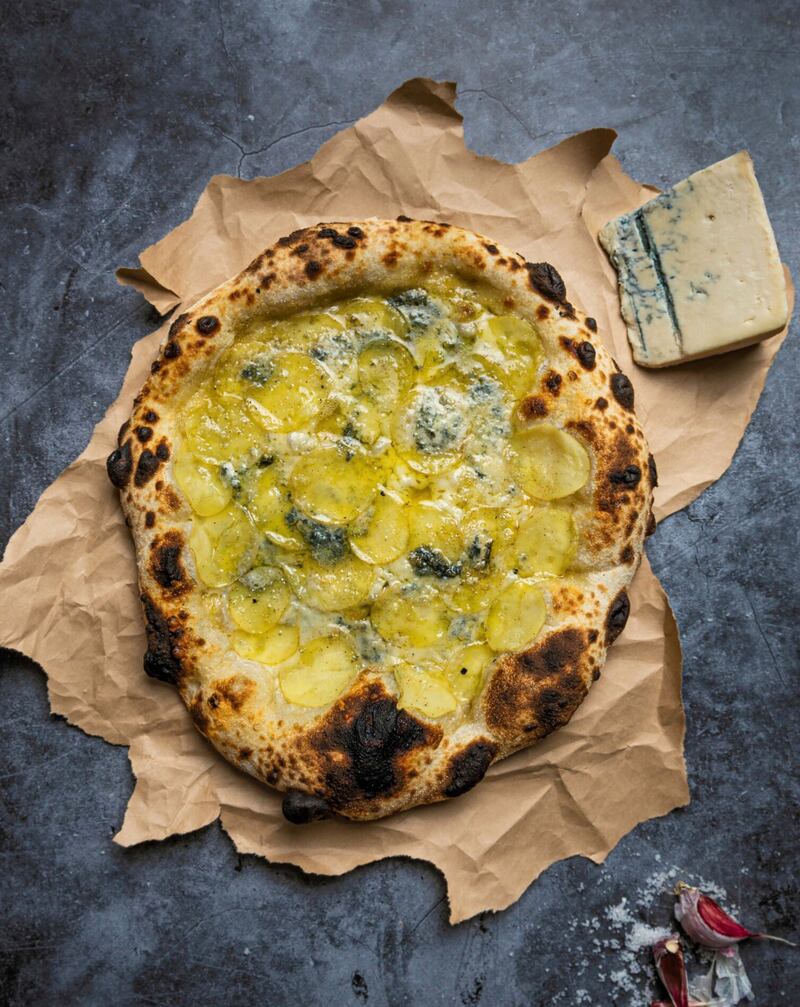
Potato Gorgonzola Pizza
| Portion Size | Equipment Needed |
|---|---|
| Makes 13- to 14-inch pizza | Baking steel or pizza stone (if using a home oven); pizza peel |
Ingredients
- 4 to 5 small new potatoes
- One 280 g pizza dough of your choice
- 2 tablespoons garlic oil (recipe follows)
- ½ cup plus 2 tablespoons shredded low-moisture mozzarella cheese
- ¼ teaspoon ground black pepper
- ¼ teaspoon flaky salt
- ½ tablespoon olive oil
For the Garlic Oil
- ¼ cup olive oil
- Pinch salt
- 4 cloves garlic
Directions
- If using a wood oven, light a fire in the oven 1 hour before you want to cook the first pizza. If using a home oven, place a baking steel or pizza stone in the oven and preheat it to its highest temperature for at least 30 to 40 minutes.
- Bring a small pot of salted water to a boil. Meanwhile, using a mandoline or sharp knife, slice the potatoes into thin rounds. Once the water is boiling, add the potatoes, stirring to ensure they don’t stick together. When they’re tender but not yet falling apart, 4 to 5 minutes, drain and let cool.
- Stretch the dough, then place it on a lightly dusted pizza peel.
- If cooking in a wood oven: Drizzle the dough with garlic oil, leaving a ½-inch (1.25 cm) border, then sprinkle with the mozzarella. Evenly distribute the gorgonzola over the pizza, then layer the potato slices over top in a single layer. Sprinkle with the black pepper and flaky salt. Follow the instructions on p. 339 for cooking. Remove from the oven and drizzle with the olive oil.
- If cooking in a home oven: Drizzle the dough with garlic oil, leaving a½-inch (1.25 cm) border, then sprinkle with the mozzarella. Evenly distribute the gorgonzola over the pizza, then layer the potato slices over top in a single layer. Sprinkle with the black pepper and flaky salt. Carefully
- slide the pizza onto the preheated steel or stone. Bake for 6 to 8 minutes, or until the cheese is melted and the crust is browned. Remove from the oven and drizzle with the olive oil.
For the Garlic Oil
- In a 1-cup jar, combine the oil and salt. Grate or rasp the garlic with a Microplane and add to the jar. Stir to combine.
- Store in an airtight container in the fridge for up to 3 weeks.