Follow Matthew James Duffy on Instagram, TikTok, or Youtube.
Recipes Excerpted from Bread Etc. Recipes + Techniques for Baking with Sourdough, Yeasted Dough, Pizza Dough + More by Matthew James Duffy. Copyright © 2025 Matthew James Duffy. Photographs by Alex Nirta. Published by Appetite by Random House®, a division of Penguin Random House Canada Limited. Reproduced by arrangement with the Publisher. All rights reserved.
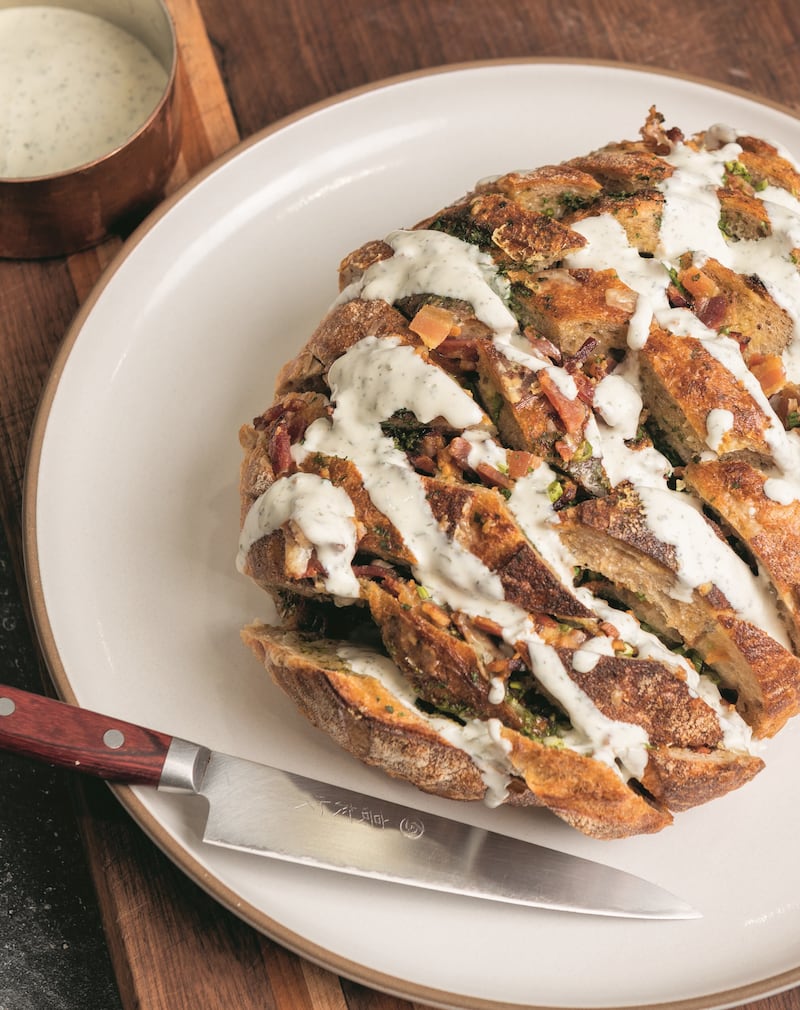
Cheddar, Bacon + Ranch Pull- Apart Bread
If you show up to a party with this loaf, I guarantee you’ll be the most popular person in the room. For a final dose of comforting goodness, the bread is drizzled with creamy, tangy homemade ranch dressing. Serve some additional dressing on the side for dipping, if desired.
MAKES: 1 loaf
Ingredients
- 1 stale sourdough loaf, preferably frozen and thawed
- 1 batch Garlic Oil (recipe below)
- 225 g bacon, cooked and chopped
- 112 g shredded Cheddar cheese
- 1 bunch green onions or chives, thinly sliced
- 112 g butter, cubed
- Salt and ground black pepper to taste
- 1 batch Ranch Dressing (recipe below)
Directions
- Preheat the oven to 375°F (190°C).
- Using a bread knife, cut long slices into the loaf on the diagonal, slicing almost to the bottom but not all the way through. Slice across the loaf in the other direction, creating a crosshatch pattern. Spoon the garlic oil over the cuts, then evenly distribute the bacon, cheese, green onions and butter inside the cuts. Wrap tightly in foil and place on a sheet pan.
- Bake for 30 minutes, then unwrap and bake for 10 minutes. Let stand for 5 minutes, then drizzle with ranch dressing and serve.
Ranch Dressing
MAKES: 1½ cups
Creamy-rich, tangy and perfectly thick, this is my go-to ranch recipe. A combination of sour cream, buttermilk and thick Greek yogurt lends the dressing an ideal texture. Let it rest for 2 hours before using it to allow the flavors to meld and blend.
Ingredients
- ½ cup sour cream
- ½ cup buttermilk
- ½ cup plain Greek yogurt
- 1 tablespoon chopped fresh chives
- 2 teaspoons chopped fresh dill
- 1 teaspoon freshly squeezed lemon juice, plus more to taste
- ¾ teaspoon hot sauce
- ½ teaspoon onion powder
- ¼ teaspoon ground black pepper
- 1 clove garlic, minced
- Salt to taste
Directions
- In a medium bowl, whisk together the sour cream, buttermilk and yogurt. Add the remaining ingredients and whisk until well combined. Taste and season with salt and lemon juice. Cover and refrigerate for 2 hours before using. The dressing will keep, covered, in the fridge for up to 4 days.
Garlic Oil
MAKES: about ¼ cup
This simple garlic-infused olive oil is a great item to have in your pizza pantry. It’s ideal for drizzling over both white and red pies.
Ingredients
- ¼ cup olive oil
- Pinch salt
- 4 cloves garlic
Directions
- In a 1-cup jar, combine the oil and salt. Grate or rasp the garlic with a Microplane and add to the jar. Stir to combine.
- Store in an airtight container in the fridge for up to 3 weeks.
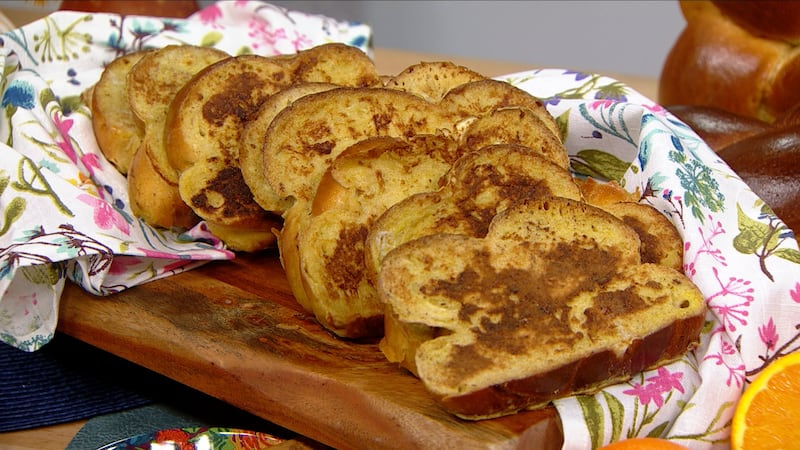
Torrijas
I was introduced to torrijas—a sweet, custardy dish of leftover bread soaked in milk, pan-fried and sprinkled with cinnamon-sugar—while on scholarship with the trade commission of Spain. We did an epic three-week trip through the country, tasting regional specialties, wines and cheeses. Torrijas stuck with me, as I’m always seeking creative ways to use leftover bread. The dish combines elements of French toast and bread pudding for the ultimate breakfast treat. It’s great on its own, but can also be served with whipped cream, fresh fruit or maple syrup.
MAKES: 8 pieces (serves 4)
Ingredients
- ⅓ cup whole milk
- 1 teaspoon vanilla extract or paste
- 1 small cinnamon stick
- 1 strip orange or lemon zest
- 8 slices stale sourdough, challah, baguette or brioche
- 3 eggs
- 5 tablespoons white sugar
- 1 tablespoon ground cinnamon
- 1 tablespoon butter
- 1 tablespoon neutral oil
Directions
- In a small heavy-bottomed pot, combine the milk, vanilla, cinnamon stick and orange zest. Bring to a simmer over medium-high heat, then remove from the heat and let stand, covered, until cooled to room temperature.
- Arrange the bread slices in a single layer in a baking dish or a rimmed sheet pan. Pour the milk over top and let the bread steep for 5 minutes.
- Meanwhile, in a small bowl, whisk the eggs, then pour into a shallow dish for easy dipping. In a medium bowl, combine the sugar and ground cinnamon.
- In a cast-iron or non-stick skillet over medium heat, heat the butter and oil. Working with one at a time, remove a bread slice from the milk mixture and hold it over the baking dish, allowing any excess liquid to drip off. Dip the bread in the egg, turning to coat both sides, then add it to the skillet. Cook, turning once, until golden brown on both sides, about 4 minutes per side. Remove from the pan and toss in the cinnamon-sugar while still warm. Repeat with the remaining slices.

Spanish Salmorejo
This chilled and bread-thickened tomato soup, originating in southern Spain, will forever be a favorite of mine. It’s closely tied to my memories of working in Spain, where I ate it on a near daily basis. In Madrid, the summers are incredibly hot, so cool soup with bread was about all I wanted to eat. Thankfully, salmorejo is bright, fresh and absolutely delicious. Now, when tomatoes are in season, I buy them in bulk, then make tons of this soup to freeze and enjoy throughout the year. If freezing and thawing it, the oil and tomato water may separate, so be sure to re-blend the soup quickly before eating. In addition to a drizzle of olive oil, I like to serve salmorejo with diced vegetables, cracked black pepper and a slice of toasted sourdough or croutons.
MAKES: 8 to 10 cups
Ingredients
- 5 large tomatoes (about 1 kg total), chopped
- 2 large red bell peppers (about 250 g total), chopped
- 1 large English cucumber (about 300 g), chopped
- 1 clove garlic, chopped
- ¼ medium red onion (about 50 g), chopped
- 2 to 3 slices stale sourdough, crusts removed, bread cut into cubes
- ⅓ cup extra-virgin olive oil, plus more to serve
- 2 tablespoons sherry vinegar
- 2 teaspoons salt, plus more to taste
- 2 ice cubes, for blending
Directions
- In a large stainless steel bowl, combine the tomatoes, peppers, cucumber, garlic, onion, sourdough, oil, vinegar and salt. Cover and refrigerate overnight.
- The next day, working in batches, transfer the mixture to a high-speed blender with the ice and puree until smooth. Pass the soup through a fine-mesh strainer, then taste and season with salt, if desired. Serve drizzled with olive oil.
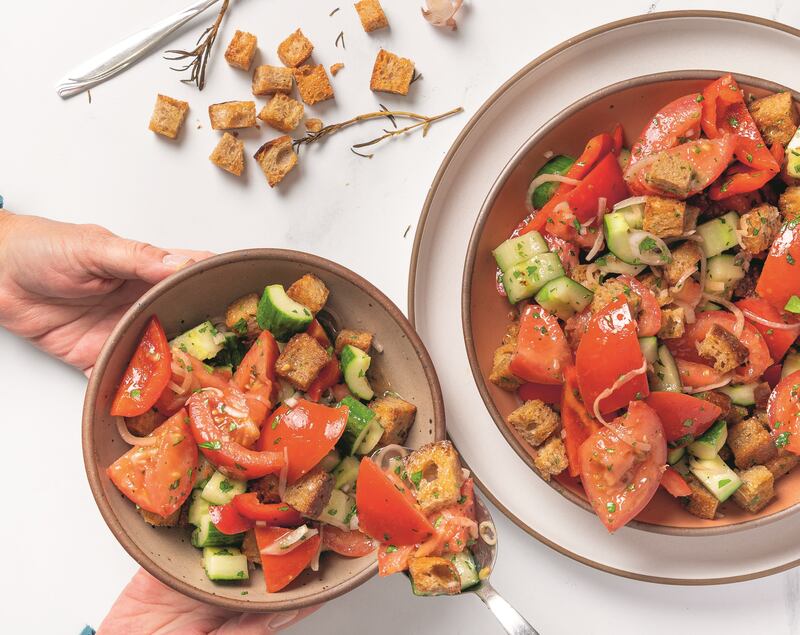
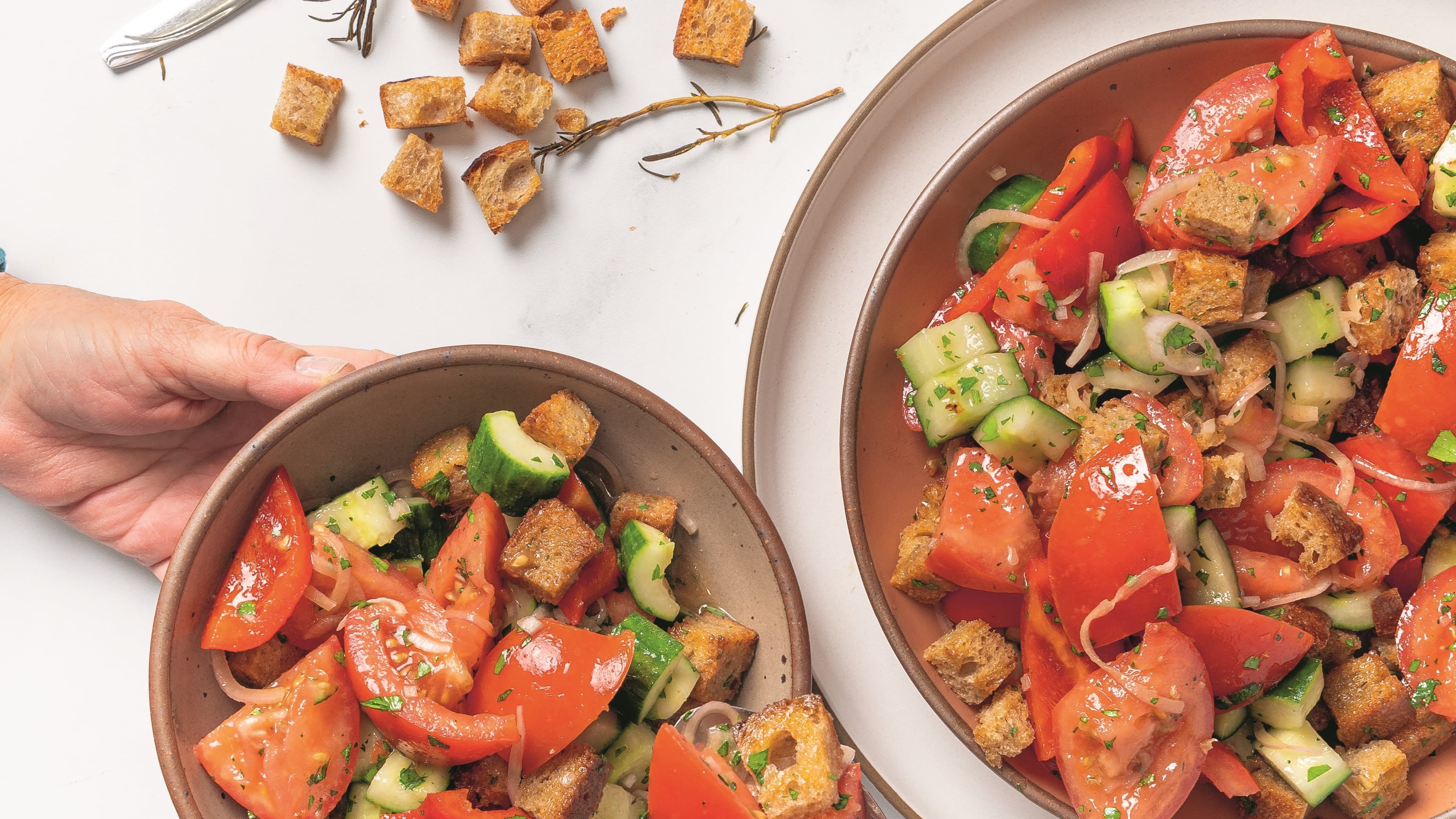
Sourdough Panzanella with Heirloom Tomatoes
Texture-packed and fresh yet filling, panzanella is one of my all-time favorite things to make with leftover bread. I eagerly await summer, as ripe, peak-season heirloom tomatoes are what take this simple salad to the next level. I like to partially peel the cucumber in long strips before slicing it, making for a slightly more tender bite. You can serve the salad immediately or let it sit for 30 to 45 minutes, which allows the bread to soak up the bright-tart vinaigrette.
SERVES: 3 to 4 as a side
Ingredients
- ½ loaf stale Pain de Campagne (recipe below) or other stale bread, cut into ¾-inch (2 cm) cubes and left out to dry overnight
- ¼ cup olive oil
- Salt and ground black pepper to taste
- 3 to 4 sprigs fresh thyme
- 1 clove garlic, smashed with skin intact
- 2 to 3 large heirloom tomatoes
- 1 small shallot, thinly sliced
- 1 large English cucumber, seeded and thinly sliced
- 1 bunch fresh basil, torn
- 2 tablespoons drained capers
- 4 to 5 tablespoons Sherry Vinaigrette, to taste (recipe below)
Directions
- In a large bowl, combine the bread cubes, olive oil and a pinch of salt. Add the thyme and garlic.
- Heat a large skillet over medium heat, then reduce to low heat and add the bread mixture. Cook, tossing frequently, until golden brown, about 5 to 8 minutes. Transfer the bread to a sheet pan and let cool to room temperature; discard the thyme and garlic.
- Meanwhile, cut the tomatoes into large chunks, season with salt and let stand for 15 to 20 minutes.
- In a large bowl, combine the bread, tomatoes, shallot, cucumber, basil and capers. Add the vinaigrette and toss to combine. Season to taste with salt and pepper.
Sherry Vinaigrette
MAKES: 1 cup
This base vinaigrette calls on the golden ratio of one part vinegar to three parts oil. You can add finely chopped shallots or herbs; try maple syrup for a touch of sweetness or soy sauce for more savory notes. Dijon is the magic ingredient, containing lecithin, which helps the oil and vinegar emulsify. It also adds depth of flavor and makes the dressing thicker, ideal for coating salad. If the dressing starts to split—which can happen if you’ve added more oil than the vinegar can take—simply whisk in some room-temperature water. I like to make a big batch of this and keep a jar in my fridge—it lasts for 14 days. Give it a good shake before drizzling over salads, vegetables, fish, meat or even toasted sourdough bread.
Ingredients
- ¼ cup sherry vinegar
- 1 tablespoon Dijon mustard
- ¼ teaspoon salt, plus more to taste
- ¾ cup extra-virgin olive oil
Directions
- In a medium bowl, whisk together the vinegar, Dijon and salt. Slowly drizzle in the olive oil, whisking constantly, until emulsified; you may not need it all. For a thicker dressing, add more oil. For a thinner dressing, add about 1 teaspoon of room-temperature water. Taste and season with salt.
Pain de Campagne
| Portion | Equipment Needed | Desired Dough Temperature (DDT) |
|---|---|---|
| Makes 2 900s loaves | Two bannetons; Dutch oven | 82°F to 86°F |
Dough Schedule
Levain: 10 to 12 hours
Autolyse: 1 hour
Mixing & Rest: 25 minutes (by hand)
Bulk Fermentation: 12 1/2 to 17 1/2 hours
Shaping & Rest: 50 to 60 minutes
Final Fermentation: 2 1/2 to 3 hours
Baking: 1 1/2 to 1 3/4 hours
Ingredients
LEVAIN
- 102 G bread flour
- 21 g rye flour
- 123 g water, room temperature
- 12 g sourdough starter
FINAL DOUGH
- 622 g Water 1
- 648 g bread flour
- 173 g whole wheat flour
- 43 g rye flour
- 259 g Levain (prepared as in step 1)
- 35 g Water 2
- Salt
Directions
LEVAIN
- MIXING + FERMENTATION: In a glass jar or plastic container, mix the flours, water and starter until combined. Loosely cover with a lid and ferment at room temperature for 10 to 12 hours, until ripe.
FINAL DOUGH
- AUTOLYSE: Roughly 1 hour before your levain will be ready, add water 1 to a large mixing bowl or dough container. Add the flours and, using a rubber spatula, start stirring in the center, drawing the water into the flour. When the dough becomes too thick to stir with the spatula, wet your hands and use them to mix the dough, pinching to incorporate any dry patches and using a plastic dough scraper to scrape down the sides of the bowl. Rest, covered, at room temperature while the levain finishes rising.
- MIXING & REST: When the levain is ready, add it and half of water 2 to the bowl. Mix with your hands just until combined. Add the salt and the second half of water 2 and, using your hands, pinch the salt into the dough until incorporated. The DDT is 82°F to 86°F (28°C to 30°C). Rest, uncovered, for 20 minutes.
- BULK FERMENTATION: Cover the bowl with a plastic bag or kitchen towel and let the dough rise at room temperature for 2½ hours, folding it two or three times in the first 2 hours, roughly 30 minutes apart. Transfer to the fridge and cold-proof for at least 10 and up to 15 hours.
- PRE-SHAPING & REST: Remove the dough from the fridge 20 minutes before you want to shape it. When ready to shape, divide the dough into two pieces (900 g each). Using a bench knife, round each portion. The bottom should stay flush with the counter, helping to create the tension needed to form a taut ball. Rest, uncovered, for 25 to 35 minutes.
- FINAL SHAPING: Shape each ball into a boule and transfer each to a floured banneton.
- FINAL FERMENTATION: Proof, covered, at room temperature for at least 2½ and up to 3 hours. The dough is ready to bake when it has risen to about one and a half times the size and is light to the touch. To check, gently press a finger into the dough; it should spring back but leave a slight indent.
- PREHEAT THE DUTCH OVEN: About 30 to 60 minutes before you are ready to bake, place a Dutch oven inside your oven, then preheat the oven to its highest temperature. Meanwhile, cut two pieces of parchment paper to roughly the same size as the opening of your Dutch oven. After 30 to 60 minutes,remove the Dutch oven to a heatproof surface.
- PREPARE TO BAKE: Remove one banneton from the fridge and gently flip the dough out onto one piece of parchment, then score at a 45-degree angle. Remove the Dutch oven’s lid and carefully place the parchment and dough inside. Place the lid back over the Dutch oven, slightly askew, and quickly spritz about 15 sprays from a water bottle upward onto the inside of the lid before closing it fully. Return the Dutch oven to the oven and immediately lower the temperature to 470°F (245°C).
- BAKE THE FIRST LOAF: Bake for 18 minutes, then remove the Dutch oven’s lid completely (the dough should be fully risen and just starting to take on colour; if it isn’t, leave the lid on for a few minutes longer for the next loaf ). Bake for 16 to 20 minutes, or until the bread is a rich golden brown. The loaf should feel light and the bottom should produce a hollow sound when tapped.
- COOLING: Transfer the bread to a wire rack to cool for at least 1 hour before slicing.
- BAKE THE SECOND LOAF: Return the Dutch oven to the oven for 15 to 20 minutes to bring it back up to temperature, then repeat steps 9 to 11 for the second loaf.