Excerpted from Hot Thai Kitchen: The 10th Anniversary Edition by Pailin Chongchitnant. Copyright © 2026 Pailin Chongchitnant. Cover and photography on pages x, 240–276 by Janis Nicolay. Recipe photos and portraits of the author by David Tam. Thailand photos by Art Chongchitnant. Photo on page 53 by Stephen Fortner. Published by Appetite by Random House®, a division of Penguin Random House Canada Limited. Reproduced by arrangement with the Publisher. All rights reserved.
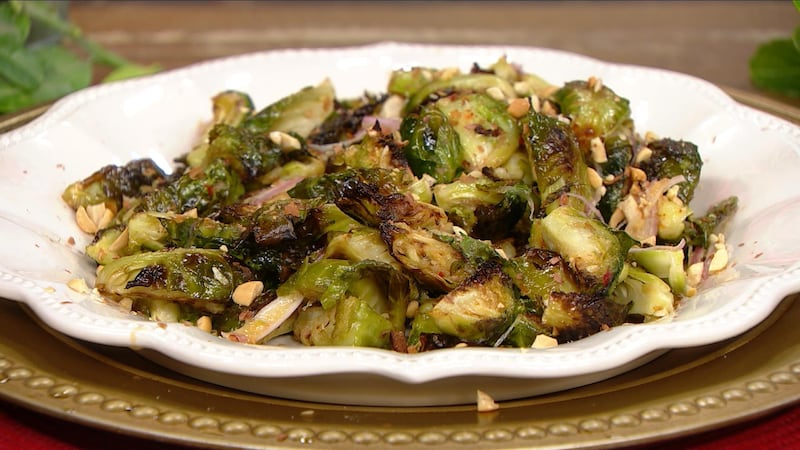
Brussels Sprouts Thai Style
| Portion size | Cook Time |
|---|---|
| 4 | 30 mins |
Ingredients
- Neutral oil, for frying or roasting
- 1 lb (450 g) Brussels sprouts, preferably small; halved or quartered if large
- 6–8 sprigs cilantro
- 3 cloves (15 g) garlic
- 1–2 Thai chilies, or to taste
- 1 1/2 Tbsp (18 g) packed chopped palm sugar
- 1 1/2 Tbsp (22 ml) fish sauce
- 2 Tbsp (30 ml) lime juice
- 1 small shallot, julienned
- 1/4 cup (35g) roasted peanuts, roughly chopped
Directions
STOVE-TOP METHOD (FOR AL DENTE BRUSSELS SPROUTS):
In a large 12-inch (30 cm) skillet, add enough oil to completely coat the bottom of the pan—don’t skimp on the oil here as it really helps with the browning and heat transfer. While the pan is still cold, add the Brussels sprouts and flip them all cut side down. Turn the heat on to medium-high and let them cook undisturbed until the bottoms are well browned. This amount of Brussels sprouts should just fit into a 12-inch (30 cm) skillet, so if using a smaller pan, you’ll need to do it in two batches, or use the oven method.
Once the sprouts are browned, toss them in the pan to flip them over, then go back and flip any sprouts that did not flip. Turn the heat down to low, cover the pan, and cook the other side for about 2 minutes.
Check doneness with a fork—it should go through with some resistance in the middle. Transfer the sprouts to a mixing bowl and let them sit while you make the dressing.
OVEN METHOD (FOR TENDER BRUSSELS SPROUTS OR IF YOU’RE COOKING A LARGE BATCH):
Preheat the oven to 450°F (230°C) and line a baking sheet with parchment paper; you can make the dressing while you wait. Toss the Brussels sprouts in the oil until they are thoroughly coated, then spread them in a single layer on the baking sheet. Roast for about 15 minutes or until the sprouts are well browned.
For the dressing, cut the cilantro sprigs in half, separating the part with leaves from the part with just stems. Chop the stems and add them to a mortar and pestle. Roughly chop the leafy parts and set them aside for later. To the mortar, add the garlic and Thai chilies, and pound into a paste. Add the palm sugar and pound until it’s dissolved into a paste, then add the fish sauce and lime juice and swirl the pestle to mix. Add the shallots and mix.
Toss the Brussels sprouts with the dressing and cilantro leaves and transfer to a plate with a bit of depth to catch the dressing. Don’t use a deep bowl for serving or the dressing will pool and soak the bottom pieces. Sprinkle with roasted peanuts and serve warm or at room temperature.
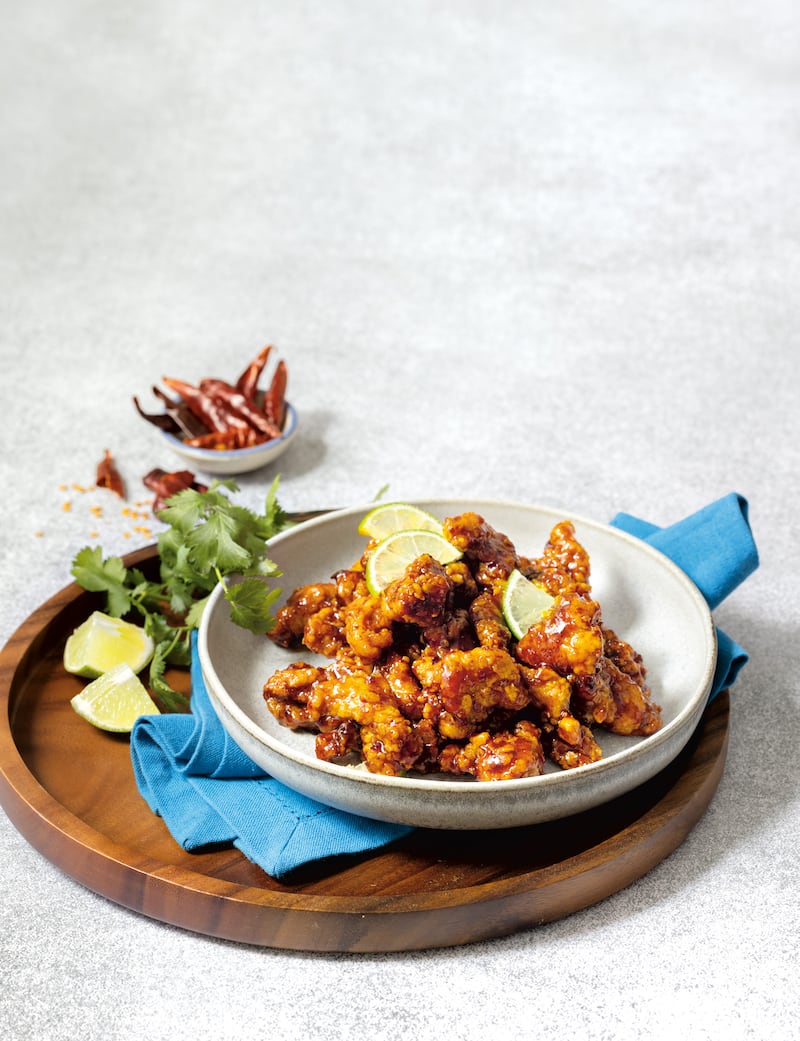
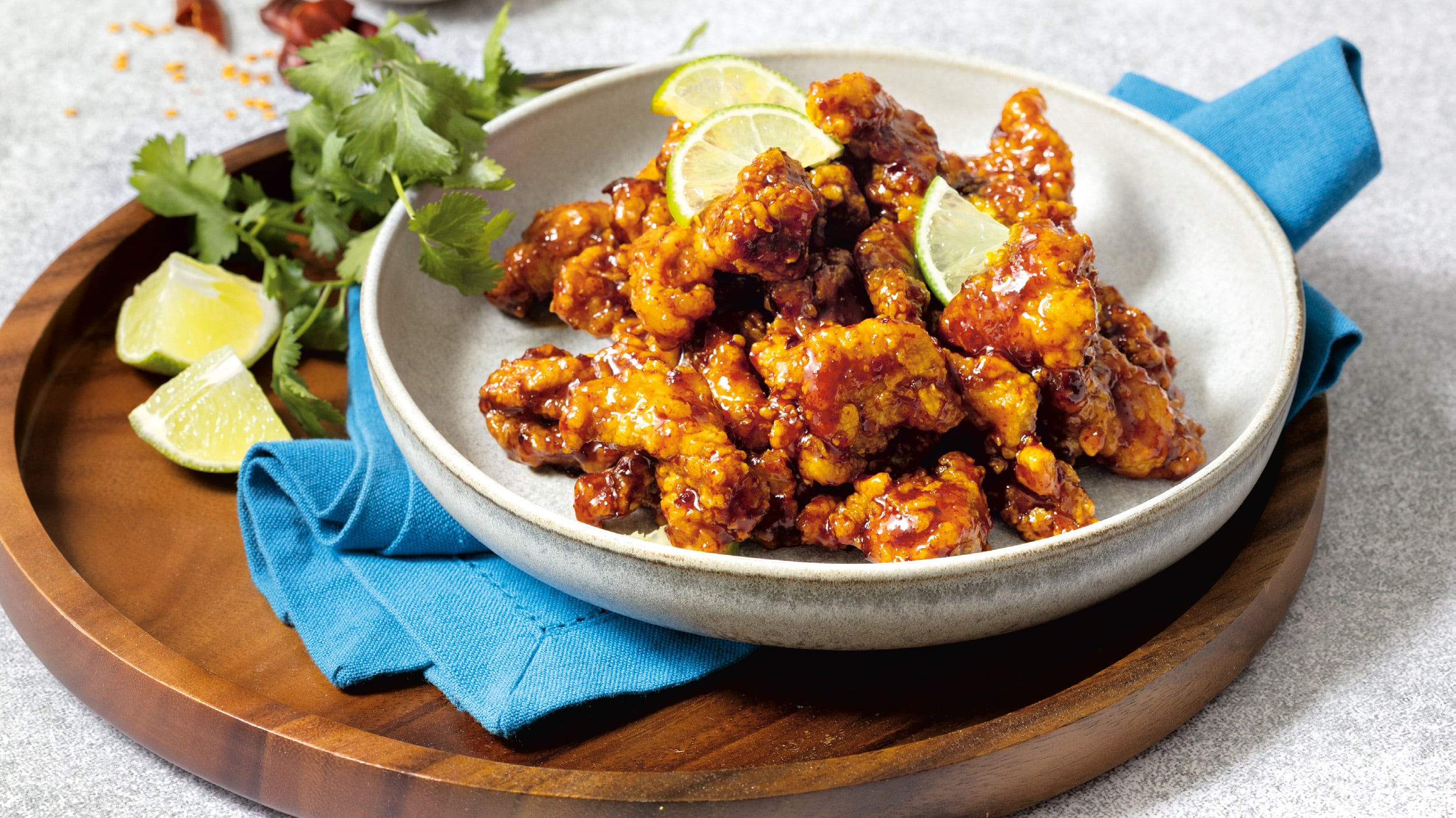
Hot Thai Chicken
| Portion Size | Cook Time |
|---|---|
| 2 | 45 mins |
Ingredients
FRIED CHICKEN
- 4 boneless, skinless chicken thighs
- 1 egg
- 2 Tbsp + 1/4 cup (45 g) cornstarch 1/4 tsp table salt
- 3/4 cup (112 g) all-purpose flour Neutral oil, for frying
SWEET CHILI LIME SAUCE
- 0.2 oz (6 g) dried chilies (see note) 3 Tbsp (36 g) granulated sugar
- 3 Tbsp (45 ml) oyster sauce
- 2 Tbsp (30 ml) Thai chili paste 2 Tbsp (30 ml) water
- 1 1/2 Tbsp (22 ml) white vinegar 1 Tbsp (15 ml) fish sauce
- 3 cloves (15 g) garlic, grated or minced 3 makrut lime leaves
- Zest of 1/2 lime
- 1 1/2 Tbsp (22 ml) lime juice Jasmine rice, for serving
Directions
Cut each chicken thigh into six to seven pieces, then place in a mixing bowl. Add the egg, 2 Tbsp (15 g) of the cornstarch, and salt. Stir until well mixed, then let sit while you prepare the sauce.
For the sauce, cut the chilies into chunks and grind into a powder in a coffee grinder. (If you want to lessen the heat of your chilies, remove the seeds and pith before grinding.)
In a small pot, combine the ground chilies, sugar, oyster sauce, Thai chili paste, water, vinegar, fish sauce, and garlic. Stir and bring to a simmer over medium heat. Simmer for 4–5 minutes until thickened, stirring frequently; it should look too thick to coat the chicken now, but we will thin it out later.
While the sauce is simmering, julienne the makrut lime leaves as finely as you can, then take the juliennes and finely mince them so you end up with tiny bits of lime leaves. Once the sauce is done simmering, stir in the minced lime leaves and the lime zest, then turn off the heat and stir in the lime juice. Keep covered while you fry the chicken.
Whisk the flour and remaining 1/4 cup (30 g) of cornstarch in a large mixing bowl. Give the chicken a quick stir and then pour it all into the flour mixture and toss until the pieces are well coated, making sure that no chicken pieces are stuck together. If you want a thicker crust, drizzle a little water over the chicken and toss one more time; the water will help the chicken pick up a little more flour. Let sit while you heat up the oil.
In a medium pot or wok, heat about 2 inches (5 cm) of neutral oil over medium-high heat to 375°F (190°C). Line a plate with paper towel. Grab one piece of chicken at a time with tongs, shake off any loose flour, then place it into the oil. Be careful not to overcrowd the pot; you’ll need to fry in two or three batches. Fry for 2 1/2–3 minutes until the chicken is golden brown, then remove and drain on the paper towel.
Pour the sauce into a large mixing bowl, using a rubber spatula to get all the sauce out, as you will need it all. Add the chicken to the sauce and quickly toss with a large spoon until all the pieces are coated. If you feel like there isn’t enough sauce to go around, use the spatula to scrape the sauce off the sides of the bowl and toss again—this will stretch the sauce further. There should be just the right amount of sauce for this amount of chicken.
Serve the chicken immediately on its own or with jasmine rice.
Red Curry with Barbecued Duck & Pineapple
| Portion Size | Cook Time |
|---|---|
| 4 | 1 hour + 30 mins |
Ingredients
- 1 whole Chinese barbecued duck, uncut (see note)
- Water, as needed
- 2 cups (500 ml) coconut milk
- 1 batch Red Curry Paste (recipe follows) or 5 Tbsp (75 ml) store-bought
- 3 Tbsp (36 g) packed finely chopped palm sugar
- 2 Tbsp (30 ml) fish sauce
- 2 cups (330 g) bite-sized pieces of fresh pineapple
- 3/4 cup (100 g) whole grape tomatoes
- 1 cup (15 g) Thai basil leaves, plus a sprig tip for garnish
- Jasmine rice, for serving
Directions
Debone the duck and cut the meat and skin into bite-sized pieces. Put the duck bones into a stockpot, cover with cold water, and bring to a simmer. Let simmer for 30–45 minutes, then discard the bones. Reserve 1 1/2 cups (375 ml) of this stock; the rest of the stock can be used in other soups.
Bring 3/4 cup (185 ml) coconut milk to a boil in a medium pot set over medium-high heat, then add the curry paste and stir to mix well. Turn the heat down to medium and stir frequently until the mixture is very thick and the coconut oil separates from the paste, about 5 minutes (the oil may not separate depending on the coconut milk you’re using; this is okay).
Add the remaining 1 1/4 cups (310 ml) of coconut milk and stir to mix. Turn the heat up to medium-high and add the reserved duck stock, 2 Tbsp (24 g) of the palm sugar, and half of the fish sauce; bring to a boil.
When the curry boils, add the duck meat and pineapple, then simmer gently for 3–4 minutes so they absorb the curry (if you cannot fit all the duck meat into the pot, set the extra aside for later). While the curry simmers, pierce the grape tomatoes with the tip of a paring knife (if the tomatoes don’t split naturally, this incision releases the built-up pressure so they won’t explode in your mouth when you eat them!).
Taste and adjust the seasoning with the remaining palm sugar and fish sauce. Remove from the heat, then stir in the pierced grape tomatoes and Thai basil, letting the residual heat gently cook the tomatoes so they do not turn mushy.
Garnish the curry with the tip of a Thai basil sprig and serve with jasmine rice.
Mango Coconut Jelly
| Portion Size | Cook Time |
|---|---|
| 6 | 40 mins |
Ingredients
MANGO LAYER
- 3 sweet, ripe Ataulfo mangoes or other sweet, non-fibrous variety
- 1/2 cup (125 ml) orange juice 11/4 cups (310 ml) water
- 2tsp (10 ml) agar agar powder 1/3 cup (70 g) granulated sugar Lime juice, to taste
- 15 small leaves mint (optional)
COCONUT LAYER
- 2/3 cup (160 ml) water 1 tsp agar agar powder
- 1/4 cup (50 g) granulated sugar 1/8 tsp table salt
- 2/3 cup (160 ml) coconut milk
Directions
FOR THE MANGO LAYER:
Cut the cheeks off two mangoes, then scoop out the flesh until you have 9 oz (250 g) of mango flesh (you may not need all the mangoes; eat any leftovers as a snack).Place the mango flesh in a blender, add the orange juice, and blend until smooth.
For the third mango, cut off the cheeks and use a knife to score the flesh into a grid of 1/2-inch (1.2 cm) cubes. Use a spoon to scoop out the flesh. If some of the pieces from the centre are particularly tall, cut them in half.
In a small pot, combine the water and agar agar powder and stir to distribute the powder. Cook over medium-high heat, stirring constantly, until it comes to a rolling boil. It’s critical for the liquid to come to a full rolling boil, not just a simmer, or the agar agar will not dissolve completely.
Add the sugar and the mango purée and stir to combine. Remove from the heat and taste; add more sugar if it isn’t sweet enough, or add lime juice if it feels a little flat. How much you need depends on how sweet or sour your mangoes are.
Pour the mango mixture into the baking pan or moulds. Distribute the mango cubes evenly in the mango base, pushing them down so they are submerged. If desired, you can add mint leaves as well, pushing the mint to submerge. Make sure to work quickly, as the agar agar powder sets at room temperature.
Let the jelly sit at room temperature just until the surface is set before you start cooking the coconut layer. If you touch it gently and your finger doesn’t poke through, you can move on.
FOR THE COCONUT LAYER:
In a small pot, combine the water and agar agar powder and stir to distribute the powder. Cook over medium-high heat, stirring constantly, until it comes to a rolling boil. Again, make sure the liquid comes to a full rolling boil, not just a simmer, or the agar agar will not dissolve completely.
Add the sugar, salt, and coconut milk and stir until the sugar is dissolved. Remove from the heat and, while still piping hot, gently pour the coconut layer over the back of a spoon onto the mango base, moving the spoon around as you pour so you don’t create too much pressure in one spot. (If you pour too aggressively, it could break the mango layer, especially if the mango is not fully set.) Allow to set at room temperature, then refrigerate for a few hours until cold.
Close to serving time, cut the jelly into pieces with a sharp knife and nudge the first piece out with a flat utensil like an offset spatula; subsequent pieces should come out easily. The jelly does not stick to the mould like gelatin, so the exterior doesn’t need to be melted for it to release. Tip: Don’t cut or unmould the jelly until close to serving time, as water naturally seeps out of the jelly once it’s uncontained for a while—though if this happens, it’ll still taste good.