| Portions |
|---|
| 4-6 |
Ingredients
For the Lamb Ragù
- 2 tbsp extra-virgin olive oil
- 1 medium yellow onion, finely chopped
- 1 carrot, finely chopped
- 1 celery stalk, finely chopped
- 3 garlic cloves, finely grated
- 454 g ground lamb
- 1 tbsp tomato paste
- ½ cup dry white wine
- 1½ cups beef stock
- 1 bay leaf
- 1 tsp dried marjoram
- ½ tsp dried thyme
- Kosher salt and cracked black pepper, to taste
For the Žlikrofi Dough
- 2½ cups all-purpose flour, plus more for rolling
- 2 large eggs
- 1 tbsp extra-virgin olive oil
- Pinch of kosher salt
- 1 to 2 tbsp water, as needed
For the Potato Filling
- 3 medium Yukon Gold potatoes, peeled
- ⅓ cup finely chopped bacon
- 1 small yellow onion, finely chopped
- 1 tbsp chopped chives
- ½ tsp chopped thyme
- Kosher salt and cracked black pepper, to taste
To Finish
- Chopped chives
- Extra-virgin olive oil or melted butter
Directions
- We’ll start with the ragù. Heat the olive oil in a wide pot set over medium heat. Add the onion, carrot, and celery and cook, stirring occasionally, until softened, about 6–7 minutes. Stir in the garlic and cook for another minute, then add the lamb and cook until lightly browned, breaking it up as it cooks. Mix in the tomato paste and cook for a minute more, then pour in the wine and let it reduce by half, about 5–7 minutes. Add the stock, bay leaf, marjoram, and thyme, bring to a simmer, then lower the heat and cook until the ragù is thickened, about 25–35 minutes. Season with kosher salt and cracked black pepper, to taste. Keep warm while you prepare the pasta.
- To make the dough, mound the flour on a work surface and make a well in the centre. Add the eggs, olive oil, and salt, then use a fork to gradually draw in the flour until a shaggy dough forms. Knead until smooth and elastic, about 8–10 minutes, adding a little water if needed. Shape into a ball, cover, and let rest at room temperature for 30 minutes.
- For the filling, cook the potatoes in a pot of salted water until tender, about 15–20 minutes. Drain well, let them steam-dry briefly, then mash while still warm. In a small pan, cook the bacon with the onion over medium heat until the fat renders and the onion softens, about 6–8 minutes. Stir this mixture into themashed potatoes along with the chives, thyme, salt, and pepper. Let the filling cool until easy to handle, then roll it into hazelnut-sized balls.
- On a lightly floured surface, roll the rested dough into one large, thin rectangle, about 1–2 mm thick.
- Arrange the potato filling balls in a single row about an inch up from the bottom edge of the dough, spacing them about a thumb’s width apart. Fold the bottom edge of the dough up and over the filling, then roll the dough away from you one full turn so the filling is completely enclosed. Using the side of your palm, press firmly between each filling ball to seal the dough and clearly define individual pockets.
- Using a knife, cut the filled strip free from the sheet along the top edge so you’re left with one long strip of sealed filling pockets. Cut between each sealed section to separate the dumplings.
- Working with one dumpling at a time, pinch the sides to form the two little “ears,” sealing the dumpling so it won’t open during cooking. Press your thumb into the middle to create the traditional hat shape. Place the shaped žlikrofi on a lightly floured surface and repeat with the remaining dough and filling.
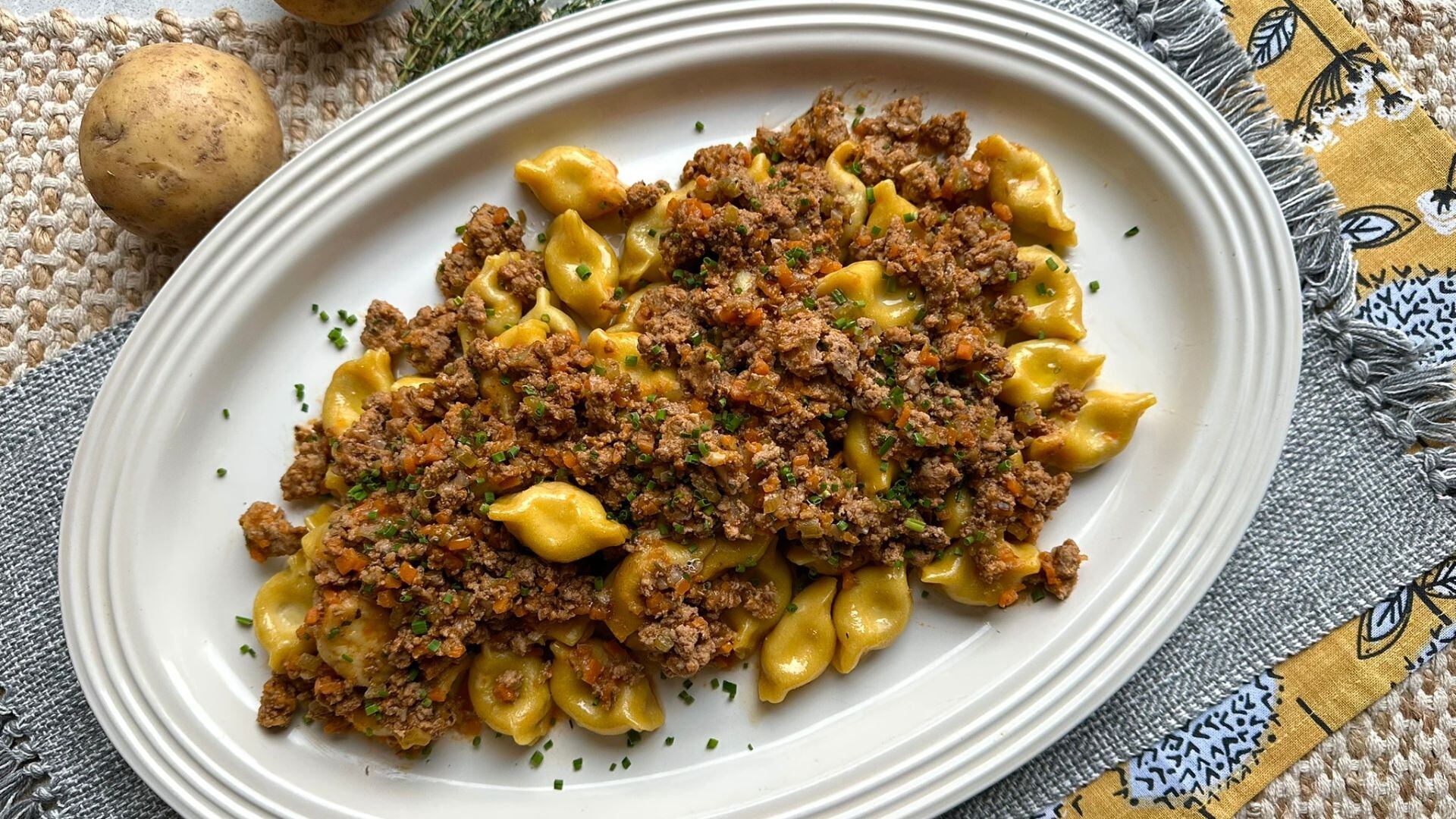
- Bring a large pot of well-salted water to a gentle boil. Cook the žlikrofi in batches until they float to the surface and the dough is tender, about 3–4 minutes. Lift them out with a slotted spoon and transfer directly to warmed bowls. Spoon the warm lamb ragù over the žlikrofi, finishing with a drizzle of olive oil or melted butter and a scatter of chives. Serve right away.
Note: The žlikrofi can be shaped and held on a lightly floured tray, covered, for up to 2 hours before cooking. They also freeze really beautifully: freeze in a single layer on a baking sheet until firm, then transfer to a container or zip-top bag. Cook straight from frozen in gently boiling salted water, adding about 1 minute to the cooking time. The ragù can be made up to a day ahead and reheated gently before serving, and any leftovers freeze well for up to 3 months.