Find Irene on Instagram and check out her website!
Watch the segment on YouTube!
Elies Tsakistes
Cracked Olives with Coriander Garlic and Lemon
These olives are a traditional delicacy and an integral part of the Mediterranean diet that contributes to the overall well-being of Cypriots. My recipe is a tribute to my grandfather, Christopher, who lovingly tended to our family’s olive trees in Northern Cyprus, producing not only olive oil but also the cherished olives that have become a part of my family’s legacy. This recipe transcends generations, reminding me of the enduring beauty of family, tradition, and the rich flavors of the past. These are served at every Cypriot’s table in just about any way: for breakfast with eggs and halloumi, as part of meze, as a solo snack, or incorporated in many dishes. I advise that you make a double batch, as these olives are absolutely addictive.
Ingredients:
- 2 cups cracked green olives
- 3 garlic cloves, crushed with skins on
- ¼ cup fresh lemon juice (1 medium lemon), squeezed lemon reserved
- ¼ cup extra-virgin olive oil
- 2 Tbsp cracked coriander seeds
- ½ tsp sea salt
Instructions:
- In a medium bowl, mix the olives, garlic, lemon juice, olive oil, coriander, and salt. Quarter the reserved lemon halves and mix into the olives.
- Marinate in an airtight container in the refrigerator overnight.
- Serve at room temperature. Olives can be refrigerated in an airtight container for up to 1 week. The longer they marinate, the more flavourful they become.
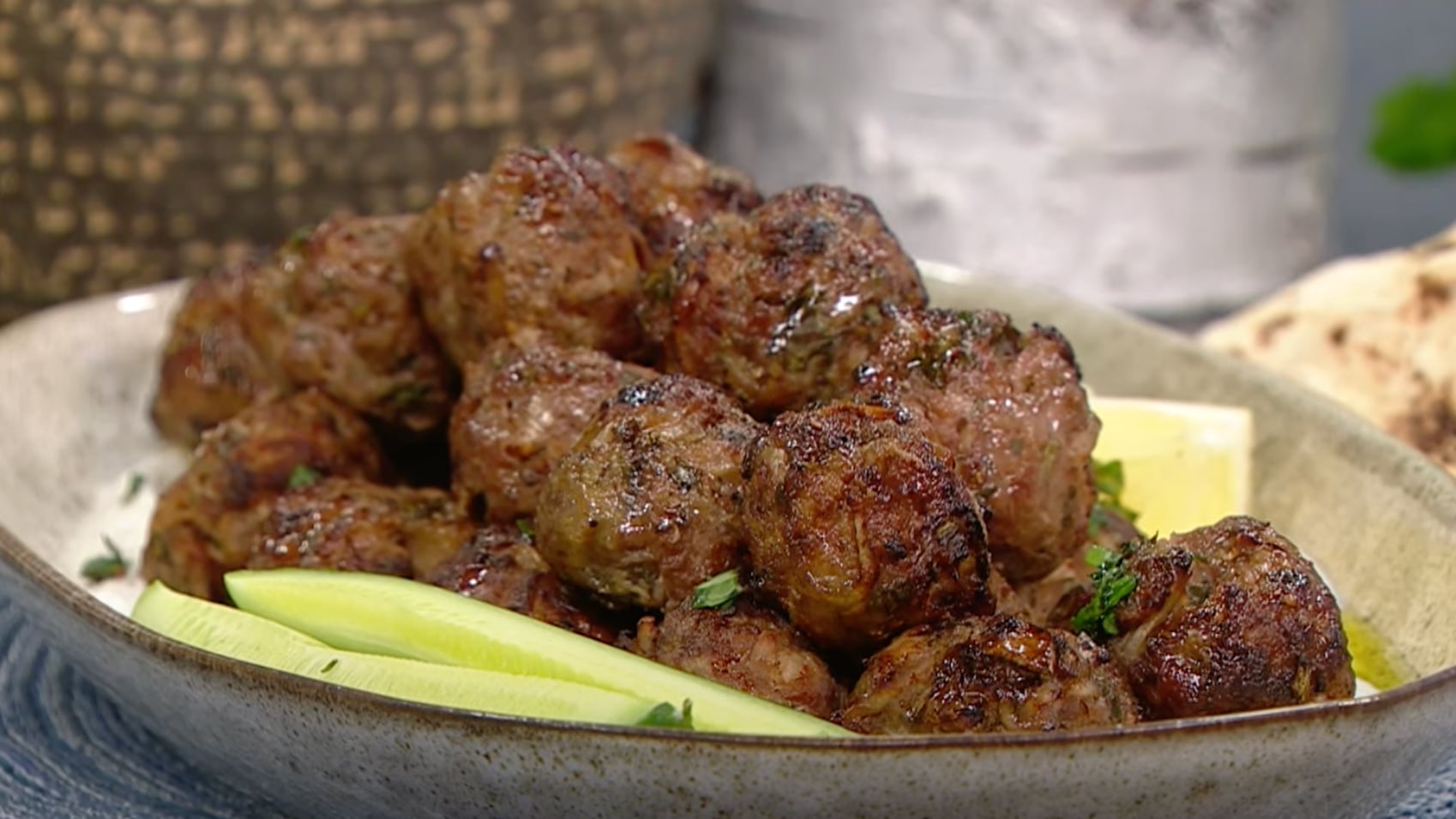
Keftedes
Cypriot Meatballs
Keftedes is a special childhood comfort food that I absolutely loved and looked forward to. For those who grew up enjoying them, they invoke a wave of nostalgia and fond memories. Infused with the essence of fresh or dried herbs, they are addictively delicious. For me, each bite offers a taste of history, a connection to the past, and a reminder of the timeless pleasure of gathering together to enjoy them—especially when we had picnics or beach days with family and friends. My mama would make a double batch weekly, and any leftovers would make it into our school lunches. My brother and I would always sneak a few before they even made it to the table for lunch or dinner. And when our school friends would stay for meals, they would always ask if keftedes were on the menu.
Ingredients:
- 1 cup finely chopped stale Eliopita or other bread or ½ cup breadcrumbs
- ¼ cup 2% milk
- 1 lb (450 g) ground pork
- 1 lb (450 g) lean ground beef
- 1½ cups grated russet potato (1 large potato, skin on, scrubbed well)
- 1 cup grated cooking onions (1 medium)
- 1 cup finely chopped fresh flat-leaf parsley leaves and tender stems
- 2 Tbsp dried mint or ¼ cup finely chopped fresh mint
- 2 large eggs, beaten
- 1½ tsp sea salt
- 1 tsp fresh ground pepper
- 2 Tbsp fresh lemon juice
- Light olive oil or sunflower oil, for frying
Instructions:
- In a large bowl, mix the bread and milk. Add the pork, beef, and potato to the bread mixture. Mix until well combined. Mix in the onions, parsley, mint, eggs, salt, and pepper.
- Brush the top of the meat mixture with lemon juice to keep the meat from browning. Cover with a tea towel and let rest for 30 minutes on the counter. Bringing meatballs to room temperature before cooking will result in a fluffy meatball.
- Fill a deep pot about a quarter full with oil. Heat the oil over medium- high heat to 350°F.
- Scoop a heaping tablespoon of the meat mixture and roll into a ball. Deep-fry meatballs in batches, turning with a fork for even cooking, until medium dark brown, 5 to 6 minutes. Do not overcrowd the pan. It’s always good to fry one and test it before frying a whole batch. With a slotted spoon, remove meatballs from the oil and place on a platter.
Spanakopita
Phyllo Spinach Pie
Spanakopita has got to be one of the most-loved pies in Greek and Cypriot culture. What’s not to love: layers and layers of buttery, crispy phyllo all wrapped around a delicious, savory spinach-cheese filling. The traditional Greek version uses fresh dill and feta cheese. My family recipe uses a blend of halloumi (as in many of our savory pies) and feta, and substitutes the dill with fresh parsley.
My mama served this to us for breakfast growing up. No mere Cheerios for us! We also enjoyed it for lunch and even dinner with a simple green side salad. Our family served it mostly vegetarian style, but for special occasions, mama would add cumin-scented ground lamb. Spanakopita is traditionally made in a rectangular pan or into individual triangles, but baking it in a springform pan showcases the layers beautifully. It’ll be a showstopper with its crispy, flaky, golden phyllo crust and warm cheesy spinach filling.
Ingredients:
- 2 Tbsp + ¼ cup extra-virgin olive oil, divided
- 1 cup finely diced cooking onions (1 medium onion)
- 9 oz (250 g) Cypriot halloumi
- 6 cups packed fresh baby spinach
- 2 cups finely chopped fresh flat-leaf parsley
- ½ cup thinly sliced green onions, including green parts
- 1½ cups crumbled sheep’s feta
- 9 oz (250 g) fresh ricotta, strained
- 2 large eggs, lightly beaten
- 1 tsp kosher salt
- ½ tsp freshly ground pepper
- ¼ cup unsalted butter, melted
- 1 lb (450 g) phyllo sheets, thawed following package directions
- 2 Tbsp white sesame seeds
Instructions:
- Preheat the oven to 350°F. Butter the bottom and sides of a 9-inch-round by 3-inch-deep springform pan and set aside.
- In a small saucepan, heat 2 Tbsp oil over medium heat. Sauté the onions until translucent and tender, 2 to 3 minutes. Transfer to a large bowl and set aside to cool slightly.
- Rinse the halloumi under cold water for 3 to 4 seconds and pat dry. This process is important, as you need to remove the salty brine from the halloumi. Grate the halloumi.
- Add the spinach, parsley, green onions, feta, ricotta, halloumi, and beaten eggs to the bowl with the cooked onions. Season with salt and pepper and toss gently until well mixed. Set aside.
- In a bowl, stir the melted butter with the remaining ¼ cup oil.
- Place the phyllo between a damp tea towel (so it doesn’t dry out). Lay a sheet of phyllo on a dry, clean work surface. Using a pastry brush, brush one sheet with the melted butter mixture, then place it in the pan. (Each sheet should be brushed with butter on the work surface first and then transferred individually to the pan and stacked.) Continue brushing seven more sheets of phyllo with butter and layering them in the pan with the edges draping over the sides. Fill with the spinach mixture and fold the edges over.
- Layer eight more sheets of phyllo on top, brushing each with melted butter. Ensure the sides of the phyllo are tucked into the pan. Brush any leftover butter mixture on top and sprinkle with sesame seeds.
- Bake for 50 to 60 minutes, until the pie is a dark golden color. Remove from the oven and allow to cool for 5 minutes before removing from the springform pan and serving warm.
Peach and Cherry Semolina Orange Blossom Custard Galette
I truly love a galette for its versatility and rustic charm. It’s a dish that can be made savory or sweet. There’s no need for perfection here. It’s way easier to make than a homemade pie and every bit as delicious! This recipe not only celebrates Ontario’s bountiful Niagara peaches and cherries but also infuses them with the warmth of brandy and nestles them within a fragrant creamy semolina custard to bring in the Cypriot flavors.
Pastry Dough
Ingredients:
- 1¼ cups all-purpose flour
- 1 Tbsp granulated sugar
- ¼ tsp sea salt
- ½ cup unsalted butter, cold, cut into ¼-inch cubes
- 7 Tbsp ice water
Semolina Custard
Ingredients:
- 2 Tbsp unsalted butter
- ⅓ cup fine semolina flour
- 1½ cups whole milk, hot
- 2 Tbsp orange blossom water
- 1 large egg, room temperature
- 1 package (0.3 oz/9 g) vanilla sugar
Peach and Cherry Topping
Ingredients:
- 2 medium peaches, skin on, cut into ¼-inch-thick wedges
- ¾ cup pitted sweet red cherries, halved
- 1 package (0.3 oz/9 g) vanilla sugar
- 1 Tbsp brandy
- 1 Tbsp all-purpose flour
Assembly:
- 1 Tbsp whole milk
- 1 Tbsp turbinado or demerara sugar
- Peach or orange marmalade
Instructions:
- To make the pastry dough, in a large bowl, mix the flour, sugar, and salt. Add the cold butter, and using a pastry cutter or two butter knives, cut it in until the mixture resembles a coarse meal with a few pea-size pieces of butter remaining. Stir the ice water until the dough comes together. Lightly knead until no dry spots remain and the dough is smooth.
- Pat the dough into a flat ½-inch-thick disk and wrap in parchment. Chill in the refrigerator for at least 1 hour.
- While the dough is chilling, make the custard. In a medium saucepan, melt the butter over medium heat. Add the semolina and cook for 5 to 6 minutes, until light golden. Slowly whisk in the hot milk to avoid lumps. Continue whisking until thickened, 7 to 8 minutes.
- Remove from heat and place a piece of parchment on top of the custard to prevent a skin from forming on the surface. Set aside to cool slightly.
- In a medium bowl, whisk the orange blossom water, egg, and vanilla sugar until frothy. Whisk the mixture into the warm custard.
- To make the topping, in a medium bowl, combine the peaches, cherries, vanilla sugar, brandy, and flour. Mix well. Set aside.
- Preheat the oven to 350°F and line a large baking sheet with parchment.
- To assemble, roll out the cold dough to a 14-inch circle. Spread the custard evenly on top of the dough, leaving 2 inches around the edges.
- Give the peaches and cherries a gentle stir and then arrange on top of the custard. Fold in the sides of the dough just enough to meet up with the peaches and cherries to make a frame around them.
- Brush the dough “frame” with the milk and sprinkle the sugar evenly on top of the pastry. Bake for 45 to 50 minutes, until the crust is golden and the fruit has softened.
- Remove from the oven and lightly brush all over with the marmalade. Let rest for 10 minutes before serving. The galette can be refrigerated in an airtight container for up to 2 days. Bring to room temperature to enjoy or wrap in parchment and bake in a 250°F oven until warmed through.
Excerpted from My Cypriot Table by Irene Matys. Copyright © 2025 Irene Matys. Photographs by Irene Matys. Published by Appetite by Random House®, a division of Penguin Random House Canada Limited. Reproduced by arrangement with the Publisher. All rights reserved.