Find Eden on Instagram and YouTube. Check out her website here!
Watch the segment on YouTube here.
An irresistible celebration of veg-forward Middle Eastern– and Mediterranean-inspired recipes guaranteed to bring fresh flavours and liven up your table, from the beloved TV personality, cookbook author, and creator of Eden Eats.
BLACK LIME–SEARED RADISHES WITH CRISPY CAPERS
| Portion size |
|---|
| Serves 4 |
There’s something about the lush bundles of candy-colored radishes at the market that’s irresistible to me. Part of it has to do with my fantasy of lounging in a Paris park while eating them spicy and raw with good salty butter, but part of it is because I love how succulent, mild, and meaty they get when cooked. It opens up a whole new way of enjoying them, which I like to complement with the bright, sour-salty notes of black lime and capers. When served as a side, these radishes are the perfect way to add brightness and substance to another dish. Or you can enjoy these on their own with good bread like laffa or Jerusalem bagel dinner rolls and a drizzle of tahini or labaneh.
Ingredients:
- 2 tablespoons unsalted butter
- 2 tablespoons extra-virgin olive oil
- 11/2 teaspoons black lime powder (see Note)
- 2 large bunches Easter or French breakfast radishes with leaves attached, rinsed and dried well
- 1/4 cup brined capers, drained and dried
- 1/2 teaspoon kosher salt
- Freshly ground black pepper to taste
- 1/4 cup chopped fresh flat-leaf parsley leaves
- 1/4 cup chopped fresh cilantro leaves
- 2 tablespoons chopped fresh mint leaves
- Juice of 1/2 lime
- 1 tablespoon sesame seeds, toasted in a dry pan until fragrant
- Flaky sea salt, for serving
- Laffa or Jerusalem Bagel Dinner Rolls, for serving
- Garlicky Tahini or Labaneh, for serving (optional)
Method:
- In a large skillet, combine the butter, olive oil, and black lime powder over medium-low heat. When the butter melts, increase the heat to medium and add the radishes and capers. Season with the salt and a few cracks of pepper and sear, stirring occasionally, until the radishes are bright and slightly blistered but still crisp, 2 to 4 minutes. Remove the pan from the heat and allow the radishes to cool slightly.
- Scatter over the parsley, cilantro, mint, lime juice, and sesame seeds and toss to combine. Transfer everything to a serving plate and finish with flaky salt. Serve with laffa or rolls and a drizzle of tahini or labaneh, if desired.
- Note: Black limes, also known as Persian or sun-dried limes, are often used in Middle Eastern and North African cooking for a layer of sour, salty flavor. To add them to a dish is to add a similar lift and brightness as fresh citrus but with even more earthy depth and complexity. You can easily find them in international markets, and you can use a Microplane to grate the rind anywhere black lime is called for in these recipes. Or you could grind them in a spice grinder and store the extra ground lime in a sealed container in your spice drawer.
ZA’ATAR ASPARAGUS WITH WALNUT-DATE FREEKEH AND TAHINI VINAIGRETTE
| Portion Size |
|---|
| Serves 2 |
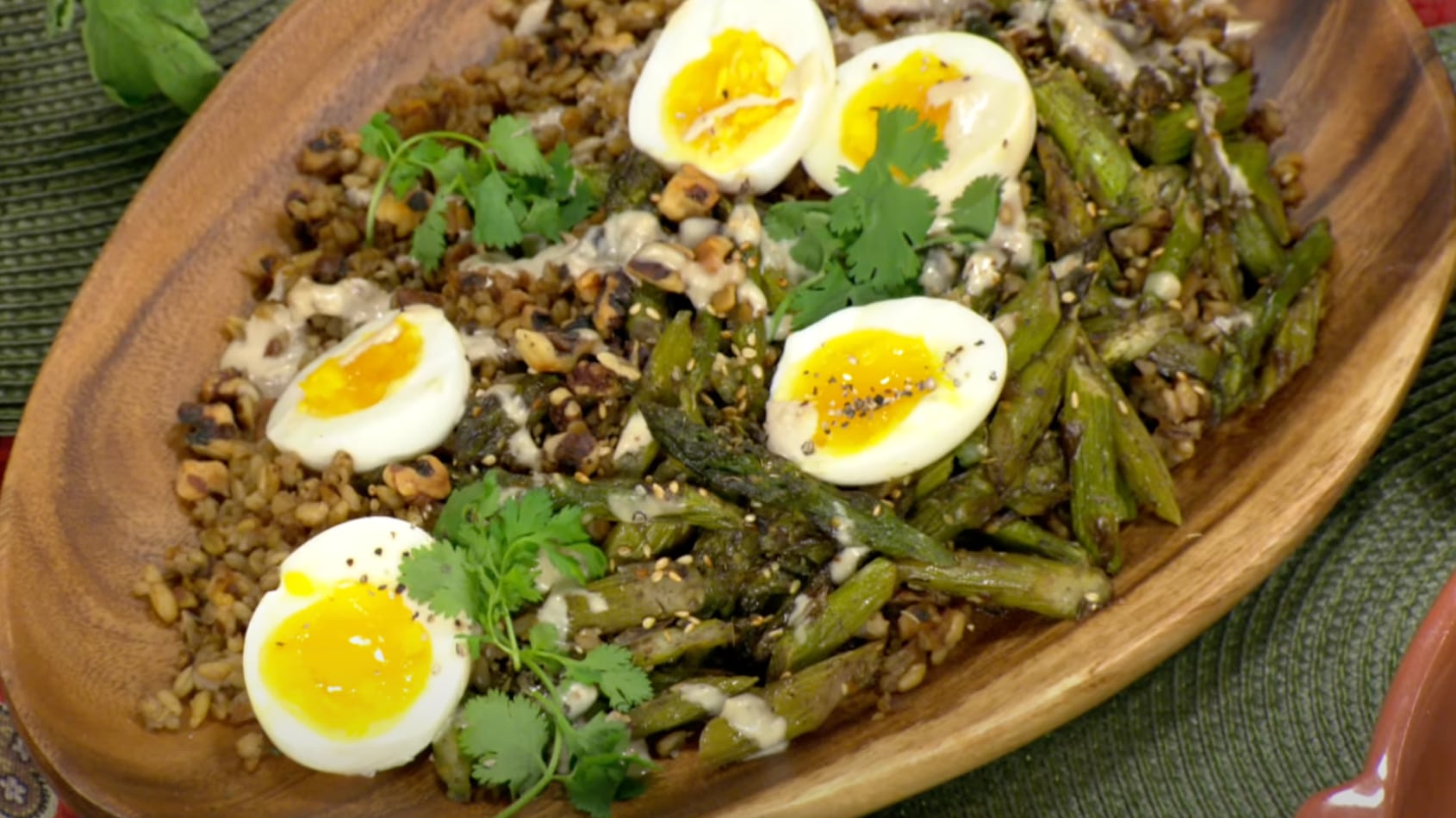
I wanted to show the sultry, moody side of asparagus, which we normally think of as bright, fresh, and perky—just like its spring veg siblings. But when you season asparagus with earthy za’atar and roast it until it’s almost charred, it officially enters its emo era. I keep things from going too far to the dark side by layering the asparagus over a freekeh salad flecked with nuts, dates, and preserved lemons and drizzled with a creamy tahini vinaigrette. When topped with a jammy egg, it becomes the ideal breakfast or lunch. The tahini vinaigrette is also a rockstar on its own, whether you’re drizzling it over a simple salad or roasted veg dishes.
ZA’ATAR ASPARAGUS
Ingredients:
- 2 tablespoons extra-virgin olive oil
- 2 teaspoons Za’atar, plus more for serving
- 1 teaspoon kosher salt
- 1 bunch asparagus, tough ends trimmed and cut into 1-inch pieces on the bias
TAHINI VINAIGRETTE
Ingredients:
- 1/4 cup tahini
- Juice of 1/2 lemon
- 11/2 teaspoons red wine vinegar
- 11/2 teaspoons honey
- 1/2 medium garlic clove, grated
- 1/2 teaspoon kosher salt
- Freshly ground black pepper to taste
For Assembly:
- 2 cups cooked freekeh (see Note)
- 1/3 cup raw walnuts, lightly toasted in a dry pan until fragrant and crushed
- 3 Medjool dates, pitted and finely chopped
- 1 tablespoon rinsed and finely chopped rind of Preserved Lemons (recipe below)
- 2 tablespoons extra-virgin olive oil
- 1/2 teaspoon kosher salt
- 2 large eggs, cooked to jammy (instructions below), peeled and halved (see Note)
- Flaky sea salt to taste
- Freshly ground black pepper to taste
Note: If you like to meal prep, I highly recommend prepping the freekeh, jammy eggs, and vinaigrette ahead of time and storing them separately in the fridge for up to 5 days, which means you can throw this dish together in minutes. You could sub bulgur, quinoa, or wild rice for the freekeh.
Method:
- Preheat the oven to 450°F.
- Make the asparagus: In a small bowl, stir together the olive oil, za’atar, and salt.
- Arrange the asparagus on a baking sheet and drizzle with the za’atar oil. Toss to coat well and roast for about 15 minutes, until lightly charred.
- While the asparagus roasts, make the vinaigrette: In a medium bowl, combine the tahini, lemon juice, vinegar, honey, garlic, salt, a couple cracks of pepper, and ¼ cup of water. Whisk until smooth and set aside.
- Assemble: In a large bowl, combine the freekeh with the walnuts, dates, preserved lemon, olive oil, and salt. Toss to mix well.
- Heap the freekeh on a serving plate and place the roasted asparagus on top or alongside. Top with the eggs and drizzle everything with the vinaigrette. Finish with a sprinkle of flaky salt and a couple cracks of pepper and serve.
PRESERVED LEMONS TWO WAYS
| Portion Size |
|---|
| 6 Lemons |
I did it. I figured out how to make the ultimate preserved lemons in under an hour. That’s a huge deal not only because this process normally takes a lot longer—and finding them in the store is not always a sure thing—but also because, along with tahini, preserved lemon is one of those ingredients that I cannot stop reaching for in the kitchen. The lemony, salty, pickle-y pop makes any dish so much more exciting, and now, thanks to these two pared-down versions—one a still-traditional shortcut, the other a full-on cheat— you can have on-demand preserved lemons whenever you need them. The traditional-ish method calls for slicing the lemons first, then rubbing them in salt, which helps the cure do its thing faster.
The need-it-now method involves boiling the lemons, which softens their skin and speeds up how quickly they soak up the salt. Either way, make sure you rinse the rinds before using them!
THE TRADITIONAL-ISH WAY
Makes 6 preserved lemons
Ingredients:
- 6 lemons, scrubbed clean and sliced 1⁄4 inch thick, plus the juice of
- 2 lemons, as needed
- 6 tablespoons kosher salt
- 1 tablespoon Aleppo pepper or red chile flakes (optional)
Method:
Bring a large pot of water to a boil over high heat. Add a 16-ounce glass jar and its lid and boil for 10 minutes. Use tongs to carefully remove the jar and lid and allow them to steam dry while you start the lemons.
In a medium bowl, toss the lemon slices with the salt and Aleppo (if using). Allow the lemons to sit at room temperature, covered, for 30 minutes before stacking them in the sterilized jar and pouring over any lemon juice and salt that’s settled at the bottom of the bowl. If the lemons are not fully submerged in juice, add more fresh lemon juice.
THE NEED-IT-NOW WAY
Makes 2 preserved lemons
Ingredients:
- 2 lemons, scrubbed clean and sliced 1⁄4 inch thick
- 2 tablespoons kosher salt
Method:
- Bring a large pot of water to a boil over high heat. Add an 8-ounce glass jar and its lid and boil for 10 minutes. Use tongs to carefully remove the jar and lid and allow them to steam dry while you start the lemons.
- In the same pot, bring 6 cups of water to a boil over high heat. Add the lemon slices and reduce the heat to medium. Simmer for 15 minutes; you want the rinds to be soft.
- Drain the lemons and allow them to steam dry in the colander or sieve. Transfer the lemons to a large bowl and toss with the salt. Layer the salted lemons in the sterilized jar, giving them a gentle nudge so they all fit. (Smooshing them a bit so they release some of their juices is not a bad thing.)
- Tightly seal the jar and store at room temperature. You can use the lemons after 30 minutes, but I recommend waiting at least 3 hours.
- Store the lemons at room temperature for up to 3 days, then store in the fridge for up to 3 months. Be sure to rinse the lemons to remove some of the salt before using them.
JAMMY EGGS
Method:
Fill a medium saucepan about three-quarters full of water and bring to a rapid boil. Carefully lower the eggs into the water and boil for 7 minutes. Immediately run the eggs under cold running water until completely cool. Peel the eggs, slice, and set aside.
ROSEMARY-HONEY HALLOUMI FRIES
| Portion Size |
|---|
| Serves 4 (Makes about 2 Cups) |
At first I wasn’t sure if people would want to take the time to coat cheese in bread crumbs and fry it. But after trying it out one night, I decided that everyone is going to want to do it, so here we freakin’ go. These are pretty much your gooey, salty, fatty, crispy, crunchy DIY mozzarella sticks, except we’re using Halloumi, which holds its shape really nicely and cuts through the richness of the breading. We’re also adding some rosemary to the dredge plus a drizzle of honey to finish things off to, you know, keep it classy.
Ingredients:
- 8 fresh rosemary sprigs
- 1 cup panko breadcrumbs
- Freshly ground black pepper
- 1 cup all-purpose flour
- 2 large eggs
- 1 (8-ounce) package Halloumi, rinsed and patted dry
- 1 cup refined avocado or grapeseed oil
- 1/4 cup honey, plus more to taste, for serving
Method:
- Strip the needles from 5 of the rosemary sprigs and finely chop them.
- On a large plate, combine the chopped rosemary with the panko and season with a few cracks of pepper. Add the flour to another large plate and season with pepper. And in a medium shallow bowl, beat the eggs and season with pepper.
- Slice the Halloumi into ½-inch-thick fry shapes. Gently pat them dry again. In small batches, coat the Halloumi in the flour, followed by the eggs, and then the rosemary panko. Continue with the remaining pieces of Halloumi.
- Line a baking sheet with paper towels.
- Heat the oil in a large skillet over medium heat. When the oil shimmers, add enough fries to comfortably fit in the pan without overcrowding and fry until golden, about 2 minutes per side. Use a slotted spoon to transfer the fries to the lined baking sheet and repeat with the remaining Halloumi.
- Remove the needles from the remaining 3 rosemary sprigs and fry just until crisp, about 30 seconds.
- Place the fries in a shallow bowl, top with the fried rosemary needles, and drizzle with the honey. Serve hot.
ROOT STEAKS WITH CHILICHURRI
| Portion Size |
|---|
| Serves 4 |
Roasting low and slow isn’t just for large cuts of meat. When you give root vegetables like celeriac or whole watermelon radishes what I like to think of as the brisket treatment, you end up with a veg transformed. They’re tender yet meaty with real body, almost like you’re cutting into a steak. So I figured why not really go there by drizzling over a “chilichurri,” which is basically chimichurri, an herby, oily, vinegar-spiked condiment that I’ve loaded up with fresh chiles. (You could technically omit them if you’re not into the heat, but I personally am here for the spice.) Give the whole thing a schmear of garlicky tahini and devour.
Ingredients:
FOR THE STEAKS
- 3 celeriac roots, peeled
- 2 large watermelon radishes, peeled (see Note)
- 3 tablespoons extra-virgin olive oil
- 1 teaspoon kosher salt, plus more as needed
- Freshly ground black pepper to taste
- 2 tablespoons unsalted butter
FOR THE CHILICHURRI
- 1 cup chopped fresh cilantro leaves
- 1/2 cup extra-virgin olive oil
- 1 tablespoon red wine vinegar
- 1 fresh cayenne chile or your favorite hot pepper (adjusting size based on its heat and removing the seeds if less heat is desired), finely sliced (optional)
- Kosher salt and freshly ground black pepper to taste
FOR SERVING
- 1 cup Garlicky Tahini
Method:
- Preheat the oven to 300°F.
- Make the steaks: Place the whole celeriac and radishes in the bottom of a large Dutch oven. Drizzle with 2 tablespoons of the olive oil and season with the salt. Cover and roast for 2 hours, until you can easily slide a knife through. Set aside to cool slightly.
- While the vegetables roast, make the chilichurri: In a medium bowl, whisk together the cilantro, olive oil, vinegar, and chile (if using). Season with salt and pepper and set aside.
- Cut the celeriac and radishes into ½-inch-thick slices. Season on both sides with salt and pepper.
- Heat the remaining 1 tablespoon olive oil and the butter in a large skillet over medium-high heat. When the butter has melted and is starting to foam, add enough vegetable slices to fit comfortably in one layer without crowding the pan. Sear until golden, about 3 minutes. Flip and sear the second side until golden, about another 3 minutes. Transfer the steaks to a plate and repeat with the remaining vegetable slices.
- To serve: Spread the tahini over a serving plate, layer the steaks on top, and drizzle with the chilichurri.
- Note: If you can’t find watermelon radishes, you could sub in rutabaga, turnips, or kohlrabi.
Excerpted from Tahini Baby by Eden Grinshpan with Rachel Holtzman. Copyright © 2025 by Eden Grinshpan. Photography by Chris Bernabeo. Published by Penguin Canada, a division of Penguin Random House Canada Limited. Reproduced by arrangement with the Publisher. All rights reserved.