Spaghetti or Tonnarelli Roman Style with Pecorino & Crushed Black Pepper
Cacio e pepe is a simple three-ingredient dish, but, as with all simple recipes, the technique is what makes it great. Small steps, like toasting the peppercorns or making the cremina (the pasta-water-and-cheese emulsion), are important to achieve the very best and creamiest version.
| Portion size |
|---|
| Serves 6 |
Ingredients
- Kosher salt
- 2 tablespoons black peppercorns
- 1 pound spaghetti or tonnarelli
- 2 cups finely grated aged pecorino, plus more for serving
- 1 cup finely grated mild or domestic pecorino
Directions
- Bring a pot of salted water to a boil for the pasta, using about half as much water as you normally would use, so the pasta-cooking water ends up starchier.
- Put the peppercorns into a dish towel or plastic bag, and coarsely crush them with a mallet or the bottom of a heavy pan. Add the spaghetti to the boiling water.
- Put half of the peppercorns into a large skillet, and toast them over low heat until the peppery smell begins to make your nose tingle, about 2 minutes. Add ½ cup pasta-cooking water, and set this aside.
- Put both of the cheeses into a medium bowl, and whisk very vigorously while adding 1 cup pasta-cooking water. Whisk until the emulsion is smooth.
- When the pasta is al dente, working quickly, set the skillet with the pepper water over medium heat, transfer the spaghetti with tongs to that skillet, and toss to coat the spaghetti in the pepper water. Remove the skillet from the heat. While tossing constantly and vigorously, pour in the cremina (the cheese-and-water mixture). Continue to toss until the pasta is coated in a creamy sauce, adding more pasta water if it seems dry. Divide it among serving bowls, and top with the reserved peppercorns and more aged pecorino. Serve immediately.
NOTE: Pecarina, especially aged pecorino, can be quite sharp in taste, so I like to add some milder, medium-aged pecorino to the mix. Ask your cheesemonger to help you choose the right cheese. The traditional pasta used in Rome for cacio e pepe is tonnarelli, long and thin strands like spaghetti, but square instead of round. They can be dry or fresh, like spaghetti alla chitarra.
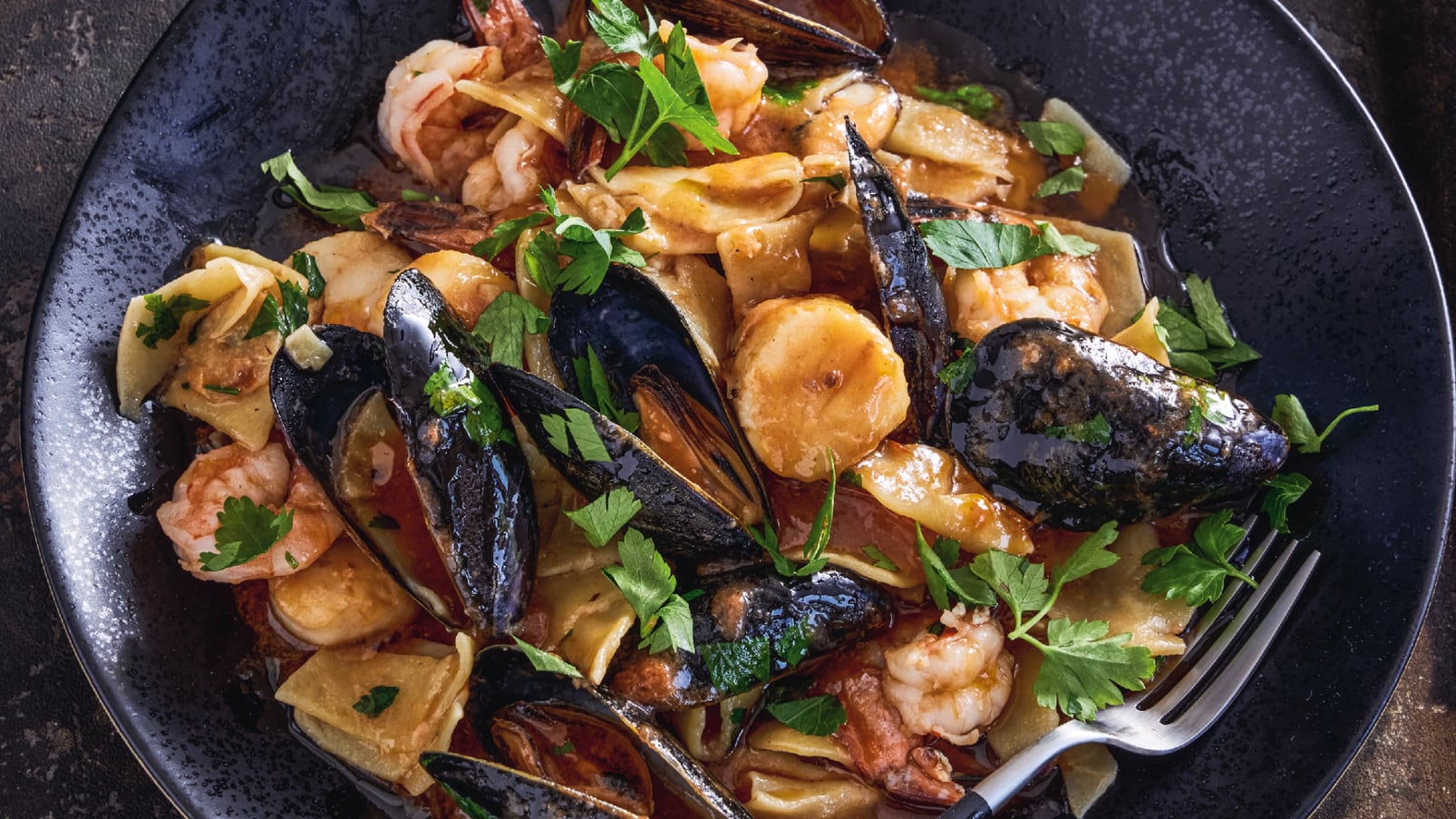
Paccheri with Mixed Seafood
Paccheri is an iconic Neapolitan pasta much used in Southern Italy. It’s like wide rigatoni, has a great mouth feel, and carries chunky sauces well. “A pacco” means a pat on the back, and this shape is also sometimes known as schiaffoni, which means “slaps:’ Both these names seem to be attributed to the slapping noise made when eating the pasta.
| Portion Size |
|---|
| Serves 6 |
Ingredients
- Kosher salt
- ¼ cup extra-virgin
- olive oil, plus more for drizzling
- 6 garlic cloves, peeled and sliced
- ½ teaspoon peperoncino flakes
- 1 pound small to medium calamari, tentacles coarsely chopped, bodies cut into rings
- One 28-ounce can whole San Marzano tomatoes, crushed by hand
- 8 ounces sea scallops, feet removed, cut into 1-inch pieces
- 8 ounces large shrimp (26 to 30 per pound), peeled and deveined
- 1 pound paccheri
- ½ cup loosely packed fresh basil leave
Directions
- Bring a large pot of salted water to a boil for the pasta.
- Heat a large Dutch oven over medium heat, and add the olive oil. When the oil is hot, add the garlic and peperoncino, and cook until the garlic is sizzling, about 30 seconds. Add the calamari tentacles, and cook until they begin to curl, 1 to 2 minutes. Add the bodies, and cook until they curl and turn opaque, about 2 minutes more. Season with ½ teaspoon salt.
- Add the tomatoes, fill the can with 1 cup pasta-cooking water, and add that, too. Bring the liquid to a simmer, and cook until the calamari are almost tender, 8 to 10 minutes. Add the scallops and shrimp, and return the sauce to a simmer. Cook until the scallops and shrimp are cooked through, about 5 minutes.
- Meanwhile, add the paccheri to the boiling water. Once the pasta is al dente, transfer it with a spider directly to the simmering sauce. Toss to coat the pasta with the sauce. Taste, and season with salt if needed. Drizzle it with a little more olive oil, and sprinkle it with the basil. Toss, and serve immediately.
NOTE: When you’re cooking assorted fish in a recipe, keep in mind that shellfish usually takes less time to cook than calamari, so you’ll need to add them in order of cooking time.