Tubaani
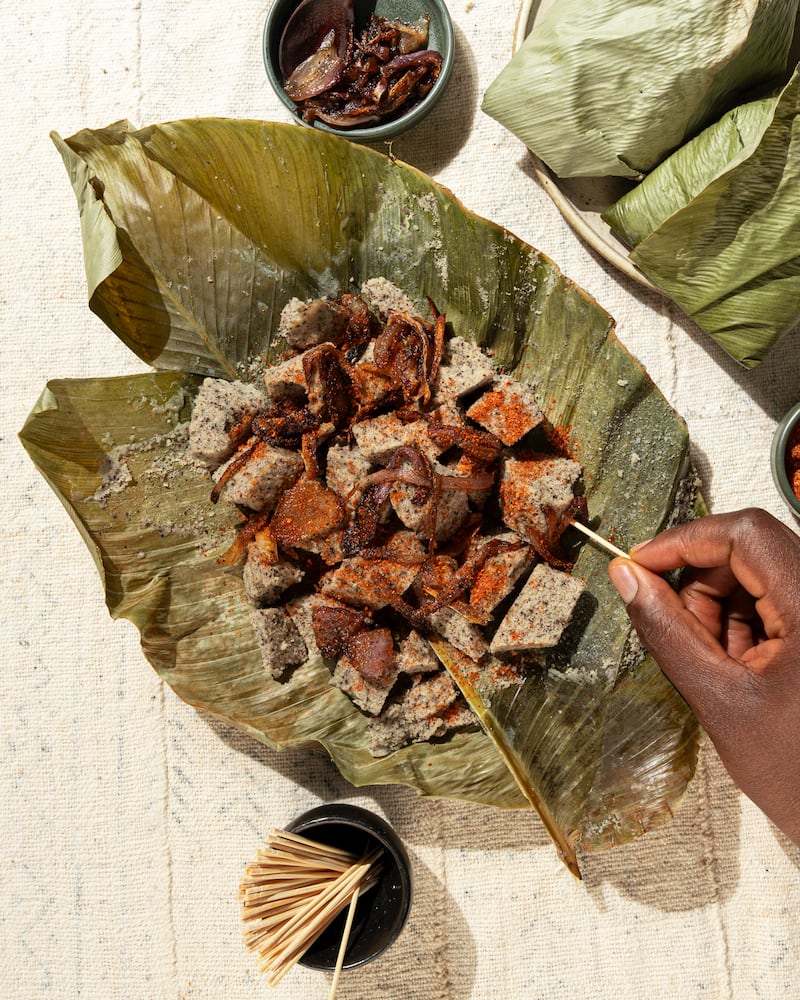
Tubaani is a steamed bean cake made from black-eyed peas. Tubaani are traditionally steamed in sweet prayer leaves (katemfe/agonomo), but can also be made in ramekins. I’ve provided instructions for both options if you happen to have access to sweet prayer leaves. Tubaani is typically served with lots of onions fried in oil (groundnut/roasted peanut oil or shea butter are preferred) and topped with powder pepper mixed with salt. The resulting meal is a simple dish packed with plant-based protein. This recipe is great for meal prep.
Ingredients
- 2 cups black-eyed pea flour
- 1/2 teaspoon baking soda
- 1/2 teaspoon onion powder (optional)
- 1/2 teaspoon garlic powder (optional)
- 1/2 teaspoon salt
- Vegetable oil (optional), for greasing ramekins
- 10 to 12 sweet prayer leaves (agonomo/katemfe) or banana leaves (optional)
Toppings
- 1/3 cup (80 ml) vegetable oil, preferably groundnut oil/roasted peanut oil, or shea butter
- 1 medium onion, sliced
- 1 tablespoon powder pepper/cayenne powder
- 1 teaspoon salt
Directions
- In a large bowl, combine the black-eyed pea flour, baking soda, onion powder (if using), garlic powder (if using), and salt. While mixing with a whisk, slowly add 3 cups (720 ml) water, until everything is well combined, to get a light pancake batter consistency.
- With a whisk or hand mixer, whip the batter for a few minutes to incorporate air. This will ensure the final texture of the tubaani is fluffy. To check that there is enough air in the batter, drop a small piece (about 1/2 teaspoon) into a small bowl of water. If it floats, it’s ready. Taste the batter and adjust the salt based on your preference.
- If you are using ramekins, generously oil four to six 8-ounce (240 ml) ramekins. Fill each ramekin about two-thirds of the way. Cover each ramekin with aluminum foil.
- If you are using leaves, place a leaf on your work surface, with the bottom facing you, and fold the bottom sides of the leaves up and in to make a triangle with one side overlapping the other, then fold the tip of the triangle to the back to form a cone. Fill each cone with about 1/2 cup of the batter, making sure not to overstuff the leaves, as the batter will expand when it cooks. To wrap, carefully fold the long sides of the leaves toward the center with one side on top of the other, then fold the top of leaves to the back.
- Fill a large pot with about 2 inches (5 cm) of water. Place the wrapped tubaani or ramekins in a steamer basket and place this steamer basket in the large pot. As an alternative to a steamer basket, you can line the pot with extra sweet prayer or banana leaves and place the wrapped tubaani on top. Cover the pot, turn on the stove to medium heat, and steam the tubaani for 25 minutes, or until a toothpick comes out clean when you poke the tubaani.
- In a medium skillet, heat the oil over medium heat until shimmering. Add the onions and sauté for 5 to 10 minutes, or until crispy. Remove from the heat and set aside.
- In a small bowl, mix the powder pepper and salt and set aside.
- Let the tubaani cool until they are comfortable to touch. Remove the tubaani from the leaves or ramekins and cut them into large cubes. Serve the tubaani topped with generous amounts of sautéed onions, some of the onion oil from the pan, and a sprinkle of the powder pepper/salt mix. Refrigerate leftovers in an airtight container for a few days.
SUBSTITIONS
- Tubaani can be made with Bambara bean flour, soy flour, or any other bean flour of your choosing. Each bean absorbs water differently, so you might need different amounts of water.
Apapransa /Akplidzi
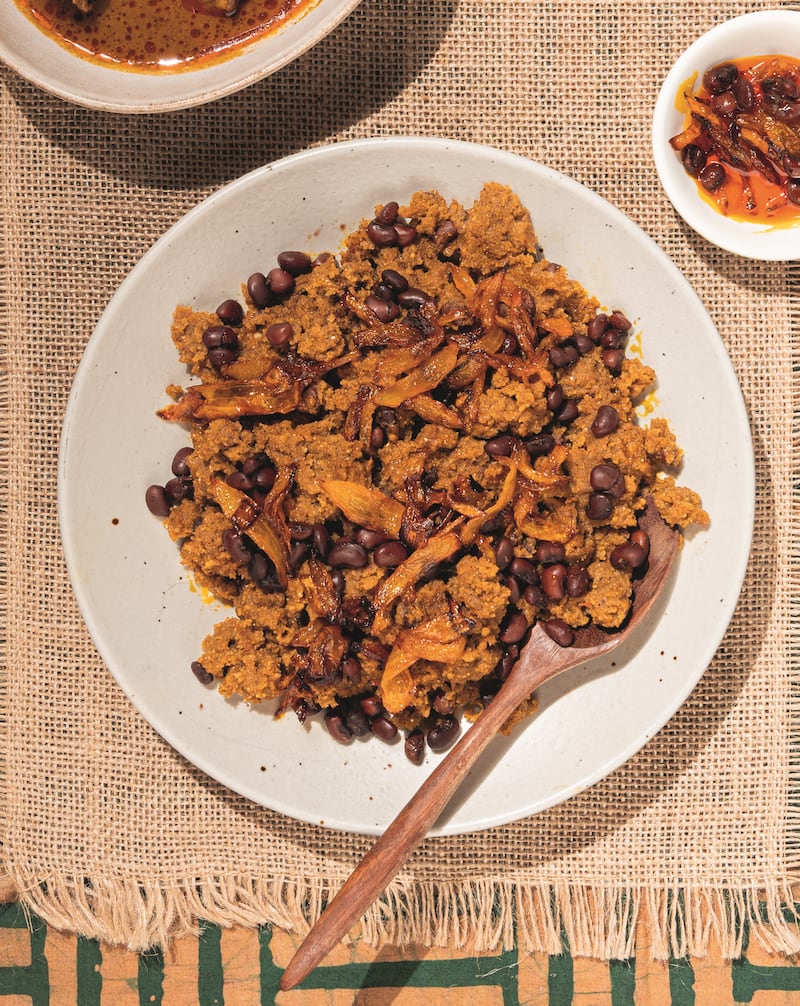
Apapransa in the Twi language, or akplidzi in the Gã language, is a perfect example of how one can bring leftovers back to life in a filling and delicious meal. This dish is a pottage (a one-pot dish with root vegetables, grains, protein, and/or vegetables) made with leftover palm nut soup, roasted corn flour, and sometimes, red cowpeas. Palm nut soup is already packed with incredible flavor, but the roasted corn flour adds an extra nuttiness to the dish. Traditionally, apapransa is topped with seafood used to make the palm nut soup, but to keep this dish 100 percent plant-based, we are increasing the amount of red beans to add both to the apapransa and as a topping. The cowpeas and the cornmeal make this an incredibly filling yet satisfying dish. If you plan to make this dish, I encourage you to cook the cowpeas while you make the palm nut soup, so that once the soup is ready, the beans are cooked and ready for the apapransa.
Ingredients
- 3/4 cup dried red cowpeas (atidua), soaked for 4+ hours
- 5 cups Palm Nut Soup (see other recipe), just the liquid
- 2 cups corn flour, dry-roasted
- Salt
- 1/4 cup (60 ml) palm oil, preferably skimmed from the top of the palm nut soup
- 1/2 medium onion, sliced
Directions
- In a large pot, combine the soaked beans and 5 cups (1.2 L) water (no salt) and bring to a boil over medium-high heat. These beans take a long time to cook, anywhere from 1 to 2 hours to on the stovetop. (Alternatively, cook the soaked beans in a pressure cooker at high heat for 40 minutes, and allow the steam to naturally release.)
- In a separate pot set, bring the palm nut soup liquid to a boil over medium-low heat. As you mix the hot soup with a wooden spoon, slowly add the roasted corn flour until you get a very wet mashed potato consistency (you may not need all the corn flour), mixing for 10 to 15 minutes. Corn flour absorbs a lot of water, so while the apapransa might look too wet, it will thicken very quickly.
- Add half of the cooked beans and mix everything. Taste for salt and adjust accordingly. Once the beans are fully incorporated and the apapransa texture goes from very wet mashed potatoes to a smooth mashed potato texture, it is ready. Turn off the heat and set the apapransa aside.
- In a small pan set over medium heat, heat the palm oil. Add the onion and sauté for about 5 minutes, or until soft.
- Aprapransa is best served hot. To serve, top the apapransa with the sautéed onions, palm oil, and some of the remaining beans. You can also enjoy with some of the palm nut soup on the side. Store any leftovers in the fridge for 2 to 3 days. As it cools down, it will get firmer. When ready to heat again, add 1 to 2 tablespoons of water to loosen up the texture before reheating in the microwave.
SUBSTITUTIONS
- Red cowpeas might be challenging to find, and adzuki beans are not a good substitute.
- Black- eyed peas are a better choice, and in a pinch, you can use canned. Use two 15-ounce (430 g) cans of black-eyed peas, skip step 1, and add the beans in step 3. Alternatively, you can completely omit the beans and go straight to step 2.
Palm Nut Soup
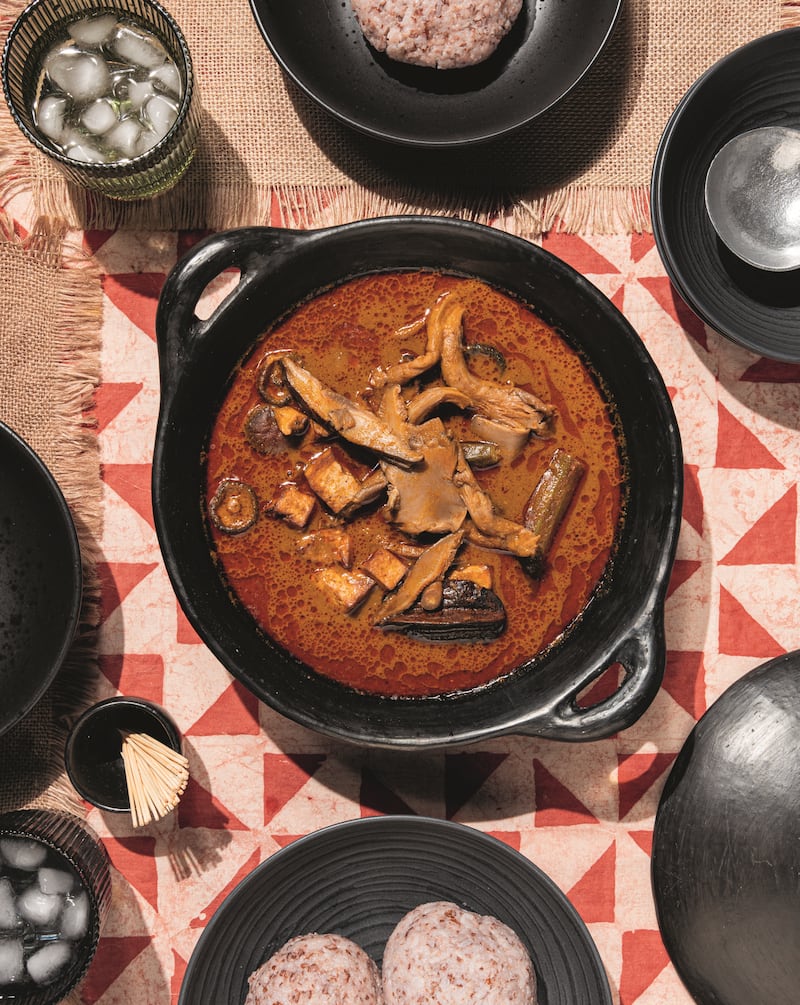
Palm nut soup is one of the most luxurious Ghanaian soups. It is incredibly flavorful and decadent, drawing its texture and tastes from the palm fruit as well as the aidan fruit and other aromatics. The soup is traditionally made with fresh palm fruit cooked, pounded, and strained into the soup, but for us in the diaspora, palm cream in a can is what we have available to us. This method still provides the same delicious taste as in the motherland.
Make the palm nut soup first before making the accompanying edible spoon (see page 275). Once the palm nut soup is made, and the excess red palm oil has been skimmed off (a delicious by-product of making palm nut soup), it can be paired with several edible spoons (see Soup and Edible Spoon Pairings, page 316). My favorite combination is either with Omo Tuo (Rice Balls, page 281) or fufu (pages 311 and 314). This soup makes more than the other soups in this section because half of the soup can be used to make Apapransa (page 173), so make sure to save enough to give apapransa a try.
Ingredients
- 2 large handfuls of dried mushrooms
- One 28.2-ounce (800 g) can palm cream (3 1/3 cups)
- 4 whole tomatoes
- 1 large onion, halved
- 2 to 3 Scotch bonnet or habanero peppers, to taste
- 5 cubes Frozen Soup Base
- 1 aidan fruit (prɛkɛsɛ); see Notes
- 3 cups (about 12 ounces/340 g) fresh mushrooms, preferably oyster mushrooms
- One 14-ounce (400 g) block firm tofu, cut into cubes
- 4 grains of selim (hwentia), optional
- 1 or 2 vegetable bouillon cubes (optional)
- Small handful of chopped cocoyam leaves (nkontomire) or spinach (optional; see Notes)
- 1 to 2 teaspoons salt
- 8 whole okro/okra pods, tops removed (optional)
Directions
- In a large pot, combine the dried mushrooms and 8 cups (2 L) water and bring to a boil over medium-high heat. Add the palm cream and boil for 15 minutes.
- Add the whole tomatoes, onion, Scotch bonnet peppers, and soup base cubes and cook for 10 minutes, or until the skins come off the tomatoes.
- Scoop the cooked tomatoes (including skins), whole onion, and Scotch bonnet into a blender. Add 2 cups (480 ml) water and blend. Pour the blended mixture back into the soup. Boil the soup over medium heat for 40 minutes.
- Add the aidan fruit, fresh mushrooms, tofu, grains of selim (if using), bouillon cube(s) (if using), greens (if using), and salt (start with 1 teaspoon and adjust based on personal preference). Simmer the soup over medium-low heat until the soup has slightly thickened, about 25 minutes. At this point the soup is ready. It should not have much foam on the top; it should be brothy but also creamy, with a layer of oil settled on the top. If the soup feels as thick as a sauce, add an extra 1 cup (240 ml) hot water and simmer for another 5 minutes. Add the whole okro (if using) and simmer the soup over medium-low for about 10 minutes until the okro is tender. Taste for salt and adjust accordingly.
- Seasoned palm oil is a by-product of making palm nut soup. Allow the soup to cool slightly so that the oil separates to the top. Use a ladle or measuring spoon to skim off as much oil from the top as possible. It is possible to skim off as much as 1 cup (240 ml) oil. Store the oil in a glass container in the fridge and use it for any cooking that requires red palm oil.
- Palm nut soup is best served warm. Store in the fridge for up to 1 week or in the freezer for 2 to 3 months. The soup thickens as it cools. To reheat, add enough water to return the soup to a brothy, creamy texture and heat on the stovetop or in the microwave.
NOTES
- For the best flavor, toast the aidan fruit directly on the burner (or if you are using a gas stove, hold it near the flames with tongs) for 5 to 10 seconds on each side to release the aroma.
- Cocoyam leaves (nkontomire) or spinach are not a common ingredient in palm nut soup anymore, but my grandmother would add them when it was made with very little animal protein. They add more volume and nutrition to the soup.
SUBSTITIONS
- You can use abemudro palm cream instead of standard palm cream for this recipe. Abemudro is canned palm cream that is usually mixed with turkey berries, aidan fruit (prɛkɛsɛ), and traditional spices. The abemudro palm cream allows cooks to include these ingredients all through one product. If you use abemudro, there’s no need to include the aidan fruit (prɛkɛsɛ) in the soup.
Omo Tuo (Rice Balls)
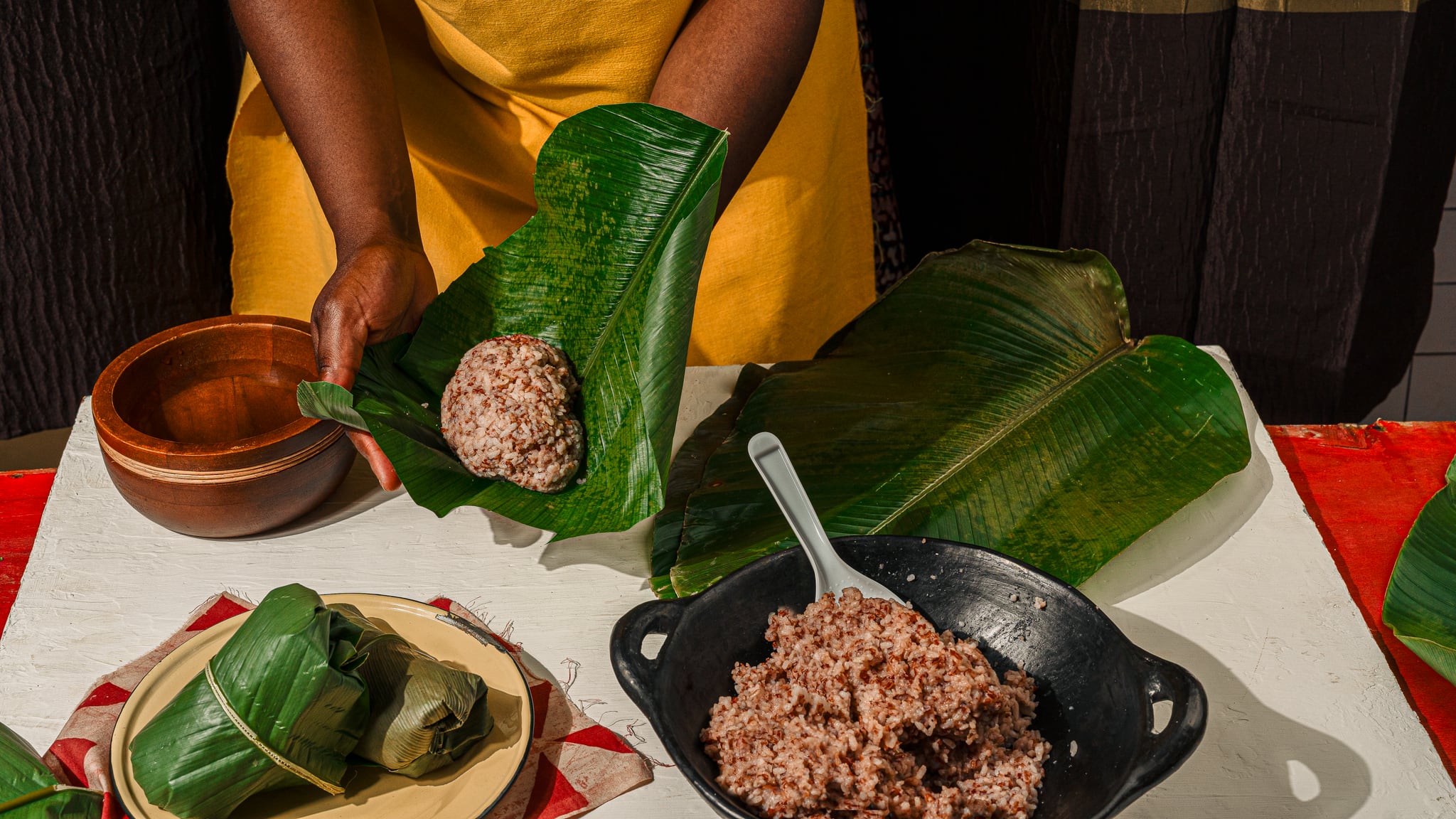
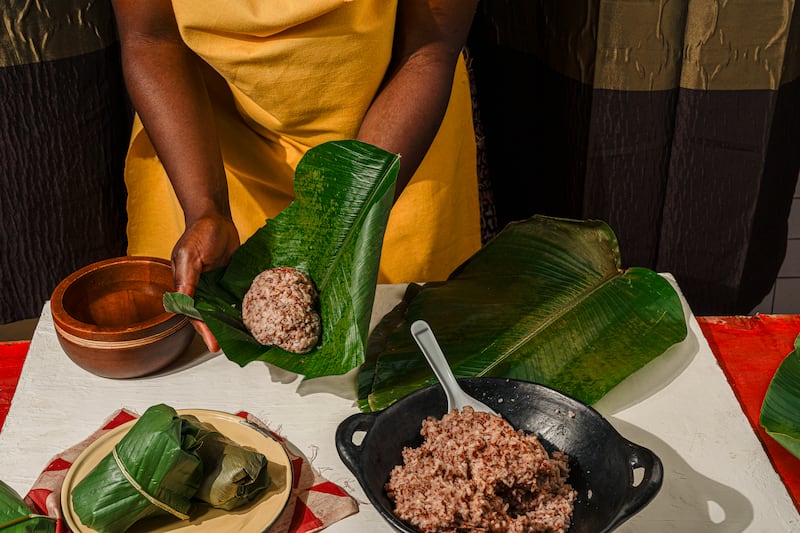
If there is one edible spoon I always recommend to beginners, it’s omo tuo. Omo tuo is simply made with softly cooked rice molded into balls. It is an incredibly forgiving recipe, as the rice can absorb a lot of water before turning into porridge. If you do not have access to fufu ingredients, or want an edible spoon with very little effort, omo tuo is your best option. Omo tuo is usually served with nut- or seed-based soups—my favorite combination is omo tuo with Groundnut Soup (page 223) or Palm Nut Soup (page 225). This recipe is made using a mix of indigenous Ghanaian brown rice and long-grain white rice, but it can be made with just white rice (see Substitution).
Ingredients
- 1 cup long-grain white rice
- 1 cup Ghanaian brown rice
- 1/2 teaspoon salt
Directions
- Combine both rices in a large bowl and rinse two times with cold water.
- In a medium pot, combine the washed rice, salt and 4 ¼ cups (1 L) water. Mix well and taste the water to ensure you can taste salt, but it’s not salty. Cover the pot and bring to a boil over medium-high heat. Keep an eye on the pot. As soon as the rice starts to boil, reduce the heat to low and cook for 25 minutes, or until tender. Let the cooked rice cool down until comfortable to the touch.
- Mash the rice with a potato masher, hand mixer, or a large mixing spoon until it starts to clump together.
- With a wet spoon and a small wet bowl, scoop about 1 cup worth of rice into the bowl and mold into a ball by rolling it around the bowl, using the sides of the bowl to help shape it into a ball. (Alternatively, wrap the mashed rice tightly into sweet prayer leaves or banana leaves.) Repeat this process until all the rice has been portioned out of the pot.
- Enjoy the omo tuo with any nut- or seed-based soup. Store the omo tuo in the fridge for a few days. To reheat, place it in a microwave covered with a wet paper towel.
SUBSTITUTIONS
- You can use any type of rice for this recipe. Short-grain rice needs a little less water while brown rice needs more water and time. As the recipe is forgiving, you can adjust the water amount, give or take 1/2 cup, based on the rice you use.
Hot chocolate
Hot chocolate is a very important component of the Ghanaian breakfast table. Many households start their day with a hot malted chocolate beverage, whether it is Milo or Ovaltine, along with a slice of soft bread. Although this recipe is not an exact replica of Milo or Ovaltine drinks, it will definitely satisfy the morning hot chocolate craving. Indigenous spices add a nice fragrance and warm flavor to take the beverage to the next level. And as a bonus, many of these spices are touted for their medicinal properties, adding a beneficial health component to an otherwise decadent drink.
Ingredients
- 2-inch (5 cm) piece of aidan fruit (prɛkɛsɛ)
- 3 grains of selim (hwentia)
- 2 whole calabash nutmegs (wedeaba)
- 1/2 teaspoon whole cloves (pɛprɛ)
- 3 tablespoons cacao powder
- 3 tablespoons sugar, or more to taste
- 1 cup (240 ml) plant-based milk, preferably coconut or soy
Directions
- In a medium pot, combine 2 cups (480 ml) water, the aidan fruit, grains of selim, calabash nutmeg, and cloves and bring to a boil over medium heat.
- Stir in the cacao powder and sugar and simmer over medium heat for 5 minutes. The drink will thicken slightly and have a glossy, velvety look.
- Add the plant-based milk, reduce the heat to medium-low, and simmer for another 5 minutes. To keep the plant-based milk from separating or boiling over, keep everything at a simmer.
- Strain the hot chocolate through a sieve into mugs (discard the spices and any solids). Taste and add more sugar if needed. Enjoy hot as part of your breakfast, or as a sweet treat to end the day.
SUBSTITUTIONS
- The spices in this drink can be adjusted based on your preference. The aidan fruit (prɛkɛsɛ) does add a nice fragrance and potential nutritional value, so it is worth keeping. But other spices like cinnamon and nutmeg can work in place of the indigenous spices.